

Car Detailing vs Car Wash: What Is the Difference and Which One Does Your Car Need?
Compare car detailing vs car wash to understand the key differences, benefits, cost value, and when your car needs basic cleaning or professional detailing.
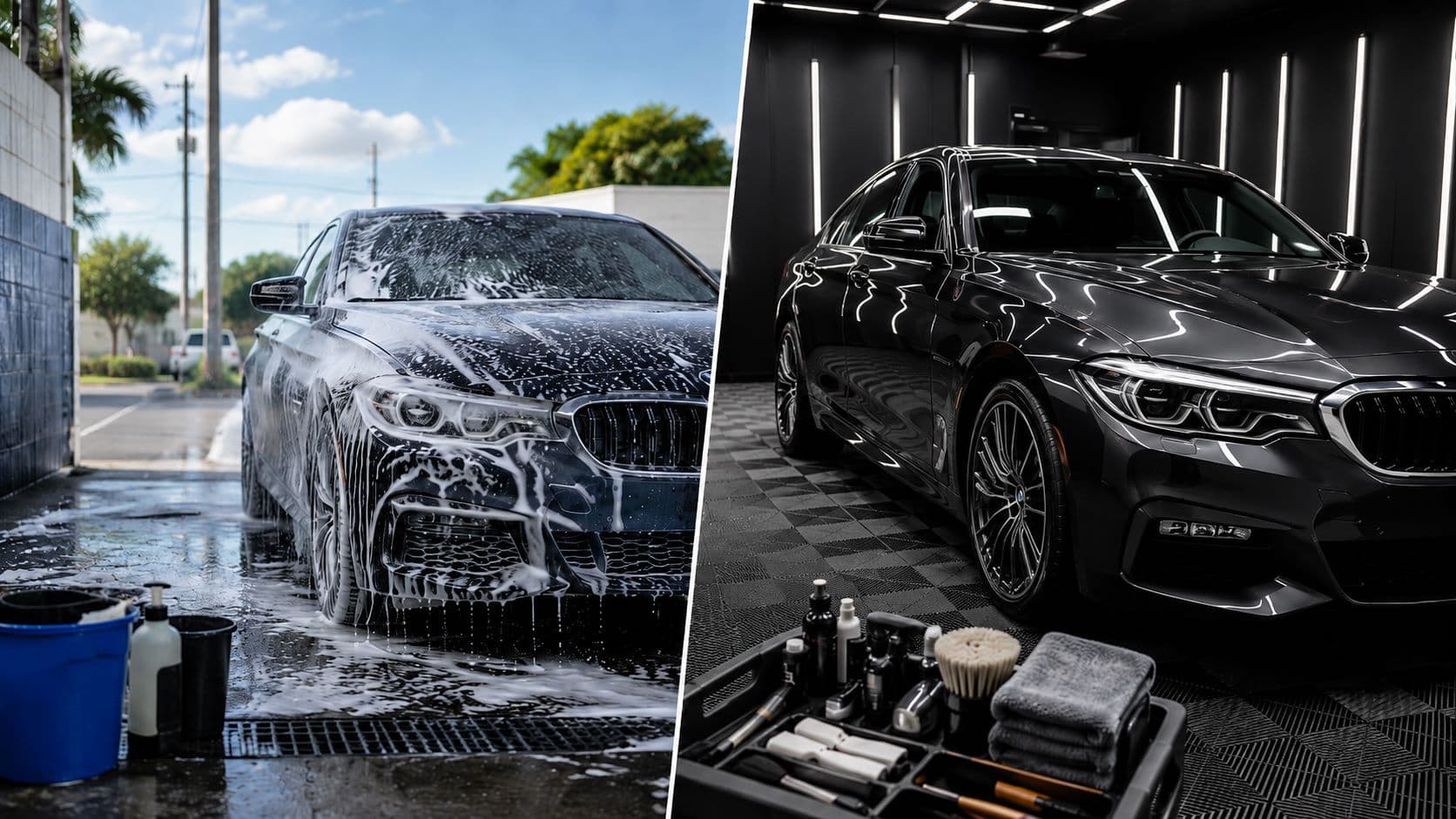
If you're wondering whether your vehicle needs a car wash or car detailing, you're not alone. While both services are designed to keep your car clean, they serve very different purposes. A car wash is ideal for removing everyday dirt, dust, and grime, whereas car detailing is a comprehensive process that deep cleans, restores, and protects both the interior and exterior of your vehicle. Understanding the difference between car detailing vs car wash will help you choose the right service based on your car's condition, maintenance goals, and budget. While both services help keep your vehicle clean, they differ significantly in terms of cleaning depth, protection, time, cost, and long-term value.
In this guide, we'll explain the key differences, compare their benefits, outline when each service is appropriate, and help you decide which option is best for keeping your vehicle looking its best.
Car Wash vs Car Detailing: Key Differences at a Glance
To clearly understand the difference between car detailing and car wash services, review the comprehensive comparison table below that outlines the primary distinctions in purpose, time, and scope.
| Feature | Car Wash | Car Detailing |
|---|---|---|
| Primary Goal | Surface cleanliness and dirt removal | Deep restoration, correction, and protection |
| Time Investment | A fraction of an hour | Several hours to a full day |
| Cost | Budget-friendly and inexpensive | A premium investment requiring specialized labor |
| Exterior Focus | Soap, water, basic rinse, and towel dry | Clay bar, paint correction, polishing, and sealing |
| Interior Focus | Brief vacuum and basic dash wipe-down | Steam cleaning, shampooing, leather conditioning |
| Paint Protection | Temporary or entirely absent | Long-lasting sealants, ceramic coatings, or film |
| Frequency | Highly frequent, usually weekly | Infrequent, typically seasonal or biannually |
What Is a Car Wash?
A car wash is a basic cleaning service designed to remove loose dirt, dust, mud, and surface grime from your vehicle's exterior. Its primary purpose is to maintain everyday cleanliness and prevent contaminants from sitting on the paint for extended periods.
While regular washing helps keep your car looking clean, it only removes surface-level dirt. It does not eliminate embedded contaminants, restore the paint, clean the interior thoroughly, or provide long-term protection.
Types of Car Washes
There are two common types of car wash services:
Automatic Car Wash
An automatic car wash uses high-pressure water, detergents, and rotating brushes or soft cloth strips to clean the vehicle.
Best for:
- Quick cleaning
- Busy schedules
- Routine maintenance
Pros
- Fast and convenient
- Budget-friendly
- Widely available
Cons
- Higher risk of swirl marks
- Less attention to detail
- Limited cleaning around tight areas
Hand Car Wash
A hand car wash is performed manually using microfiber wash mitts, car-safe shampoo, and proper washing techniques.
Best for:
- Maintaining paint quality
- Premium vehicles
- Regular vehicle care
Pros
- Safer for paint
- Better cleaning quality
- Greater attention to detail
Cons
- Takes longer
- Usually costs more
Automatic Car Wash vs Hand Wash: Which Is Better?
| Feature | Automatic Car Wash | Hand Car Wash |
|---|---|---|
| Speed | Under 15 minutes | 30–60 minutes |
| Cost | Lower | Higher |
| Convenience | Drive-through | Appointment or drop-off |
| Cleaning Quality | Removes surface dirt | More thorough cleaning |
| Paint Safety | Higher chance of swirl marks | Safer when performed correctly |
| Drying | Air dryers or cloth strips | Microfiber towel drying |
| Best For | Quick maintenance | Protecting paint finish |
Why Hand Washing Is Better for Your Car's Paint
Automatic car washes often use rotating brushes or cloth strips that come into contact with hundreds of vehicles each day. Even well-maintained systems can trap small particles of dirt and grit, which may cause fine swirl marks or micro-scratches over time.
Professional hand washing is generally gentler because it uses clean microfiber mitts, the two-bucket wash method, and dedicated drying towels. These techniques reduce the risk of scratching while providing a more detailed clean.
What Is Car Detailing?
Car detailing is a comprehensive vehicle restoration and protection service that goes far beyond a standard car wash. Rather than simply removing dirt, detailing deep cleans, restores, and protects both the interior and exterior to help maintain the vehicle's appearance and condition.
Professional detailing uses specialized tools, techniques, and products to remove contaminants, correct minor paint defects, and apply protective treatments that help preserve the finish over time. Unlike a regular car wash, which focuses on surface cleaning, detailing restores the vehicle as close to showroom condition as possible while helping protect it from future wear and environmental damage.
Exterior Car Detailing
Exterior detailing focuses on restoring and protecting your vehicle's paint and exterior surfaces. Typical services include:
- Safe hand washing
- Clay bar decontamination
- Paint correction
- Machine polishing
- Wheel and tire cleaning
- Trim restoration
- Wax, paint sealant, or ceramic coating application
Many vehicle owners also choose Paint Protection Film (PPF) after detailing to provide additional protection against stone chips, scratches, and road debris.
Interior Car Detailing
Interior detailing deep cleans and restores the cabin to improve cleanliness, comfort, and hygiene. Common services include:
- Deep vacuuming
- Steam cleaning
- Carpet and upholstery shampooing
- Leather cleaning and conditioning
- Dashboard and trim cleaning
- Air vent detailing
- Glass cleaning
- Odor removal
How Professional Car Detailing Works: Step-by-Step Process
Professional detailing follows a systematic process to safely restore and protect every part of the vehicle.
A full detailing service typically includes:
- Pre-rinse and foam wash to loosen dirt safely.
- Hand washing using pH-neutral shampoo and microfiber mitts.
- Paint decontamination with clay bars and iron removers.
- Paint correction to remove swirl marks, oxidation, and light scratches.
- Polishing to restore depth, gloss, and clarity.
- Protection using wax, sealants, ceramic coating, or Paint Protection Film (PPF).
- Interior detailing, including vacuuming, steam cleaning, upholstery treatment, leather conditioning, and odor removal.
- Final inspection to ensure every surface has been cleaned and protected.
Because each step builds on the previous one, professional detailing delivers results that cannot be achieved through regular washing alone.
7 Signs Your Car Needs Professional Car Detailing
Knowing when to schedule a professional detail can save you from permanent damage. To help you identify when your vehicle requires professional attention, review the clear indicators below that signal your car needs detailing.
| Warning Sign | What It Means | Required Action |
|---|---|---|
| Paint feels rough to the touch | Bonded contaminants are embedded in the clear coat | Clay bar treatment and decontamination |
| Water no longer beads on the surface | Protective wax or sealant has completely worn off | Apply fresh wax, sealant, or ceramic coating |
| Interior has persistent odors | Bacteria and organic matter are trapped in fabrics | Steam cleaning and ozone treatment |
| Stains will not come out with regular cleaning | Deep penetration into upholstery fibers | Professional hot water extraction |
| Paint looks dull and lacks depth | Oxidation and micro-scratches are present | Paint correction and polishing |
| Swirl marks are visible in sunlight | Improper washing techniques have damaged the clear coat | Machine polishing to level the surface |
| Brake dust will not wash off wheels | Contaminants have baked onto the alloy surface | Specialized wheel cleaner and iron remover |
Benefits of Car Detailing
Investing in professional car detailing provides numerous advantages beyond just making your vehicle look clean. To understand why detailing is worth the investment, review the comprehensive list of benefits below that demonstrate how this service protects and enhances your vehicle.
Restores Gloss and Clarity
Paint correction removes years of accumulated swirl marks and oxidation, revealing the deep, mirror-like finish that was present when the car was new.
Removes Harmful Contaminants
Clay bar treatment and decontamination processes eliminate industrial fallout, tree sap, and brake dust that regular washing cannot remove, preventing long-term paint damage.
Protects Paint from Environmental Damage
Applying ceramic coatings or sealants creates a protective barrier against ultraviolet rays, acid rain, bird droppings, and chemical contaminants.
Extends Paint Life
By removing damaging contaminants and applying protective layers, detailing significantly extends the lifespan of your vehicle's factory paint.
Improves Resale Value
A meticulously maintained interior and flawless exterior create a strong first impression, allowing you to command a higher selling price.
Makes Future Cleaning Easier
Hydrophobic coatings cause water and dirt to bead up and roll off, making routine washing faster and more effective.
Enhances Driving Experience
A clean, fresh-smelling interior free of allergens and bacteria creates a more pleasant and healthier driving environment.
Car Wash vs Detailing: Which One Does Your Car Need?
While regular car washes are essential for removing everyday dirt and keeping your vehicle clean, they cannot restore faded paint, remove embedded contaminants, or provide lasting protection. Professional detailing goes beyond cleaning by correcting imperfections, rejuvenating interior surfaces, and protecting your vehicle against future damage. Think of car washing as routine maintenance and detailing as long-term preservation.
Deciding whether you should get a car wash or car detailing depends entirely on your current goals, budget, and the condition of your vehicle. To help you decide whether you should get a car wash or car detailing, use the decision matrix below to match your current vehicle needs with the appropriate cleaning service.
| Vehicle Condition or Goal | Recommended Service | Primary Benefit |
|---|---|---|
| Routine maintenance and removing fresh mud | Car Wash | Quick, affordable surface cleaning |
| Preparing the car for a long road trip | Car Wash | Ensures clear visibility and basic cleanliness |
| Paint feels rough to the touch | Car Detailing | Clay bar treatment removes bonded contaminants |
| Swirl marks and dull paint are visible | Car Detailing | Paint correction restores deep gloss and clarity |
| Spills, stains, or bad odors in the cabin | Car Detailing | Deep extraction and steam cleaning restore the interior |
| Maximizing value before selling the vehicle | Car Detailing | Comprehensive restoration attracts higher buyer offers |
| Protecting brand-new paint from environmental damage | Car Detailing | Application of ceramic coatings or paint protection film |
Car Detailing vs Car Wash Cost: Is Detailing Worth It?
Yes. Car detailing typically costs more than a standard car wash because it involves significantly more time, specialized equipment, premium products, and skilled labor. While a car wash focuses on removing surface dirt, detailing includes deep cleaning, paint correction, interior restoration, and protective treatments such as wax, sealants, ceramic coatings, or paint protection film. Although the upfront investment is higher, detailing can help preserve your vehicle's appearance and resale value over time, making it a worthwhile investment for long-term vehicle preservation.
How Often Should You Wash and Detail Your Car?
Understanding how often you should detail your car and how often you should wash it is key to maintaining its appearance.
A car wash should be performed frequently. Depending on your driving habits and local climate, washing your vehicle every week or every two weeks is ideal. This prevents dirt, bird droppings, and road salt from sitting on the clear coat and causing permanent damage.
Detailing, on the other hand, is a much less frequent requirement. You should aim to have your car professionally detailed once or twice a year. Seasonal changes are a great time to schedule a detail, such as preparing the car with a protective coating before harsh summer sun or deep cleaning the interior after heavy rainy seasons.
DIY Car Detailing vs Professional Detailing: Which Is Better?
Many enthusiasts ask if they can detail their car at home. The answer depends on the level of correction and protection you want to achieve.
DIY car detailing is perfectly fine for basic maintenance. You can easily wash the car by hand, vacuum the interior, wipe down the dashboard, and apply a spray wax. However, true paint correction, deep interior extraction, and the application of professional-grade ceramic coatings require specialized equipment, controlled environments, and expert training.
Professional detailers inspect paint thickness before performing paint correction to reduce the risk of excessive clear coat removal. Ceramic coatings should only be applied after proper paint decontamination and correction for the best results. If you attempt to use a machine polisher without proper knowledge, you risk burning through the clear coat. Similarly, improper interior steam cleaning can damage sensitive electronic modules. For deep restoration and long-term protection, hiring a professional car detailing service is always the safest and most effective choice.
Common Car Washing Mistakes That Damage Your Paint
Even well-intentioned car owners can accidentally damage their vehicle's finish. To help you avoid costly errors, review the common mistakes below that can harm your paint and interior surfaces.
| Mistake | Why It's Harmful | Correct Approach |
|---|---|---|
| Washing in direct sunlight | Soap and water dry too quickly, leaving water spots | Wash in shade or during cooler parts of the day |
| Using dish soap | Strips wax and dries out rubber and plastic trim | Use pH-neutral car wash shampoo only |
| Using dirty wash mitts | Trapped dirt acts like sandpaper on the clear coat | Use clean mitts and the two-bucket method |
| Skipping the drying step | Water spots form as droplets evaporate | Dry immediately with clean microfiber towels |
| Using one bucket for washing | Dirt gets redeposited onto the paint surface | Use separate buckets for wash and rinse water |
| Applying wax to dirty paint | Seals contaminants into the clear coat | Always wash and decontaminate before protection |
| Using household cleaners | Harsh chemicals damage automotive surfaces | Use products specifically formulated for cars |
| Wiping dust with a dry cloth | Creates hundreds of micro-scratches | Use a detail spray and clean microfiber towel |
Protect Your Car After Detailing with Ceramic Coating or PPF
Professional detailing prepares the paint surface for protective treatments, making it the ideal time to install Paint Protection Film (PPF) or ceramic coating. Since contaminants, oxidation, and swirl marks have already been removed, these protective solutions bond better to the paint and provide longer-lasting performance.
Ceramic Coating
Ceramic coatings create a durable, hydrophobic layer that repels water, dirt, UV rays, and chemical contaminants. They also enhance gloss and make routine washing easier.
Ceramic coating is ideal for drivers who want easier maintenance and long-lasting shine.
Paint Protection Film (PPF)
Paint Protection Film provides physical protection against stone chips, road debris, scratches, bug splatter, and minor abrasions. High-quality self-healing PPF can even repair light swirl marks when exposed to heat.
PPF is especially recommended for:
- New vehicles
- Luxury cars
- Sports cars
- Highway commuters
- Vehicles driven in harsh environments
For maximum protection, many vehicle owners combine ceramic coating with Paint Protection Film, using PPF on high-impact areas and ceramic coating on the remaining painted surfaces.
Does Car Detailing Increase Your Car's Resale Value?
A common question among vehicle owners is whether detailing is worth the financial investment. The short answer is that detailing significantly impacts the perceived value of your vehicle.
When it comes time to sell, first impressions dictate the negotiation. A vehicle with a flawless, glossy exterior and a fresh, odor-free interior signals to potential buyers that the car has been meticulously maintained. This psychological advantage allows you to command a higher asking price and justifies your valuation. Furthermore, the protective coatings applied during a detail preserve the paint and interior materials, preventing the depreciation that comes from environmental wear and tear. Ultimately, the cost of a professional detail is easily offset by the increased resale value it generates.
Car Wash vs Car Detailing: Which Service Is Right for You?
Understanding the distinct roles of a car wash and a full detail is essential for proper vehicle ownership. A car wash is your routine maintenance tool, keeping the surface clean and preventing immediate environmental damage. Car detailing, however, is the ultimate restoration and preservation service. It corrects imperfections, deeply sanitizes the cabin, and applies advanced protections to shield your investment.
By combining frequent, safe washing with periodic professional detailing and long-term paint protection, you ensure your vehicle remains a source of pride. Whether you are preparing for a cross-country road trip or planning to sell your vehicle in the future, a comprehensive detailing service is the best way to protect your car's appearance and its financial value.
FAQs about Car Wash vs Car Detailing
- Is car detailing better than a regular car wash? A car wash removes surface dirt, while car detailing deep cleans, restores, and protects your vehicle. Both are important, but detailing offers longer-lasting results and better paint protection.
- How often should you detail your car? Most cars should be professionally detailed every 6 to 12 months. Vehicles driven frequently or exposed to harsh weather may benefit from detailing every 3 to 6 months.
- Does car detailing remove scratches? Detailing can remove light scratches, swirl marks, and oxidation through paint correction. Deep scratches usually require professional body repair.
- How long does a full car detailing service take? A full detailing service typically takes 3 to 8 hours, depending on the vehicle's size, condition, and services included.
- Is car detailing worth the cost? Yes. Car detailing protects your vehicle's paint and interior, improves its appearance, and can help maintain its resale value.
- Can I detail my car at home? You can handle basic cleaning at home, but paint correction, ceramic coating, and deep interior restoration are best left to professionals.
- Does car detailing include engine cleaning? Not always. Engine bay cleaning is usually offered as an optional or premium detailing service.
- What is the difference between ceramic coating and Paint Protection Film (PPF)? Ceramic coating protects against UV rays, dirt, and chemicals, while PPF provides physical protection from stone chips, scratches, and road debris.
- Should I detail my car before applying ceramic coating or PPF? Yes. Detailing removes contaminants and prepares the paint, helping ceramic coatings and PPF bond properly for better performance.
- Does car detailing increase resale value? Yes. A clean, well-maintained vehicle makes a better impression on buyers and can help improve its resale value.
Read also
 Global Hi-Tech FilmsWindow Films
Does Automotive Window Film Affect GPS, Mobile Signals or Keyless Entry?
Does automotive window film affect GPS, mobile signals or keyless entry? Learn how film construction can influence vehicle connectivity and signals. Explore now.
 Global Hi-Tech FilmsArchitecture
Can Window Film Be Applied to Double-Pane and Low-E Glass?
Can window film be used on double-pane and Low-E glass? Learn about compatibility, glass types, thermal stress and key installation factors. Explore now.
 Global Hi-Tech FilmsWindow Films
Why Does Automotive Window Film Bubble, Peel or Change Color?
Discover why automotive window film bubbles, peels or changes color, the common causes of film failure, and how quality installation helps prevent damage.