

Car Maintenance Checklist: Daily, Monthly & Mileage-Based Service Guide
Follow this car maintenance checklist with daily, monthly and mileage-based service tips to keep your vehicle safe, reliable and performing well.
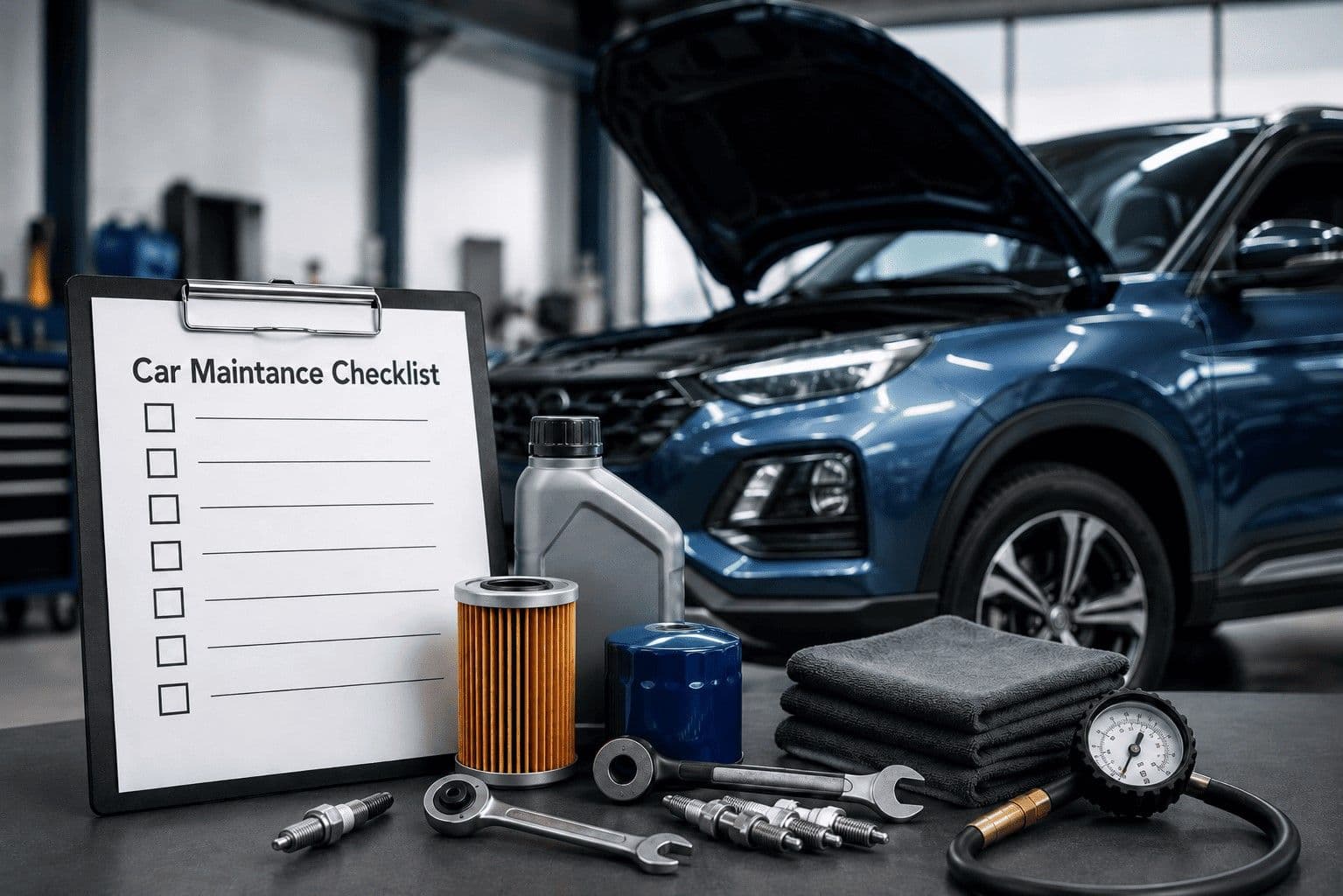
A comprehensive car maintenance checklist includes daily visual inspections, monthly fluid checks, and strict mileage-based servicing to keep your vehicle running efficiently and safely. Following a structured car service checklist prevents unexpected breakdowns, maximizes fuel economy, and protects your financial investment over time. Whether you are a first-time owner or a seasoned driver, adhering to a complete vehicle maintenance checklist ensures every mechanical component operates at its peak.
This detailed car servicing guide breaks down the essential car maintenance schedule you need to follow, transforming complex mechanical care into simple, actionable steps for long-term reliability.
Quick Car Maintenance Checklist
A quick car maintenance checklist helps you stay on top of essential vehicle care tasks without missing critical inspections. Follow this simple breakdown based on frequency:
- Daily: Perform a visual inspection, check lights and indicators, and monitor dashboard warning signs.
- Monthly: Inspect engine oil, coolant levels, tyre pressure, and battery condition.
- Mileage-Based: Schedule oil changes, replace filters, inspect brakes, and check belts at regular intervals.
Daily Car Maintenance Checklist
Many drivers overlook the importance of daily inspections, but a quick two-minute routine can prevent major issues. Knowing what should be checked daily in a car takes minimal effort and sets the foundation for a solid preventive maintenance plan.
Daily Car Inspection: Visual Walk-Around
Before you even open the door, take a quick look at your vehicle. Look for any obvious signs of tire deflation, fluid leaks on the ground, or new cosmetic damage. This simple habit is a core component of your daily car maintenance checklist.
Dashboard Warning Lights Check
When you turn the ignition, pay close attention to the dashboard. If the check engine light, oil pressure warning, or temperature warning stays illuminated after the engine starts, do not ignore it. Addressing these alerts immediately can save your engine from catastrophic failure.
Check Lights and Indicators
Ensure your headlights, taillights, and turn signals are functioning properly. You can verify this by parking facing a wall or garage door and checking the reflections, or by asking a family member to stand behind the vehicle while you test the brakes.
Monthly Car Maintenance Checklist
Moving beyond the daily glance, a thorough monthly car maintenance checklist requires you to pop the hood and inspect the vital fluids and components. These car maintenance steps for beginners are easy to perform at home without specialized tools.
Monthly Car Fluid Checks (Engine Oil, Coolant & More)
Your vehicle relies on various liquids to operate smoothly. Checking these car fluid levels monthly is non-negotiable.
- Engine Oil Check: Pull the dipstick, wipe it clean, reinsert it, and pull it out again. The oil should be at the proper level and amber in color. If it is dark, thick, or gritty, it is time for a change.
- Coolant Level Check: Never open a hot radiator. Check the translucent reservoir tank when the engine is cold, ensuring the liquid sits between the minimum and maximum marks.
- Monthly Car Fluid Checks (Engine Oil, Coolant & More): Top up the brake fluid if it is low, but remember that a sudden drop in brake fluid often indicates a leak that requires professional brake inspection. Keep the windshield washer fluid full for clear visibility.
Tyre Pressure and Battery Health Check
Proper tyre pressure maintenance directly impacts your fuel efficiency and safety. Use a reliable tire pressure gauge to check all four tires, and do not forget the spare tire. Additionally, perform a battery health check by looking for white or blue crusty buildup on the terminals. If you see corrosion, clean it with a wire brush to ensure a strong connection.
To help you execute a flawless monthly car maintenance checklist, we have organized the essential tasks into a clear car inspection checklist. Use the table below to track your car fluid levels and critical components every thirty days, ensuring no vital fluid or safety component is overlooked during your routine checks.
The table below provides a quick monthly car inspection checklist for easy tracking.
| Component to Inspect | Action Required | What to Look For |
|---|---|---|
| Engine Oil | Check dipstick level and condition | Level within safe zone; amber color (dark means change needed) |
| Coolant | Check reservoir tank (engine cold) | Level between min and max marks; no debris in fluid |
| Brake Fluid | Check reservoir level | Level above the minimum line; fluid is clear, not murky |
| Tire Pressure | Use a digital or analog gauge | Matches the PSI listed on the driver side door jamb sticker |
| Battery Terminals | Visual inspection and cleaning | No white or blue corrosion; cables are tight and secure |
| Wiper Blades | Test with washer fluid | No streaking, squeaking, or skipped spots on the glass |
Mileage-Based Car Service Schedule
While daily and monthly checks handle immediate safety, long-term reliability depends on your mileage based car service schedule. Different components wear out at different rates, and following the manufacturer's recommended vehicle servicing intervals is crucial.
Always consult your owner's manual, as the exact numbers vary by make and model. However, the following car service intervals guide provides a general periodic car maintenance checklist by mileage for most modern vehicles.
Following a precise mileage based car service schedule prevents premature wear and tear. This car service intervals guide acts as your periodic car maintenance checklist by mileage, ensuring you never miss crucial vehicle servicing intervals that keep your engine and transmission in optimal condition.
| Mileage Interval | Essential Services to Perform |
|---|---|
| 5,000 to 10,000 km (3,000 to 6,000 miles) | Engine oil and filter change, tire rotation, brake inspection, check all belts and hoses. |
| 20,000 to 40,000 km (12,000 to 25,000 miles) | Replace engine air filter, replace cabin air filter, brake fluid flush, inspect suspension components. |
| 50,000 to 60,000 km (30,000 to 40,000 miles) | Replace spark plugs, flush coolant system, inspect timing belt (replace if required), check transmission fluid. |
| 80,000+ km (50,000+ miles) | Replace timing belt (if not done), flush transmission fluid, inspect water pump, replace serpentine belt. |
Note: If you frequently drive in severe conditions, such as heavy stop-and-go traffic, extreme temperatures, or dusty environments, you should shorten these intervals by 20 to 30 percent.
Car Maintenance Tips for Different Weather Conditions
Your car upkeep routine must adapt to the environment you drive in. Extreme weather places additional stress on your vehicle, making these routine car maintenance tips vital for global drivers.
Car Maintenance Tips for Winter
Cold temperatures reduce battery capacity and thicken essential fluids. Before winter arrives, test your battery capacity and ensure your antifreeze mixture is correct to prevent the coolant from freezing. If you live in an area with snow, invest in dedicated winter tires, as all-season tires harden and lose traction below seven degrees Celsius.
Car Maintenance Tips for Summer
Heat is actually harder on your battery than cold weather, as it accelerates internal corrosion. During summer, pay extra attention to your cooling system. Ensure the radiator fins are free of debris and that the engine cooling fans are engaging properly. Also, monitor your tire pressure closely, as hot asphalt causes the air inside tires to expand.
Car Maintenance Tips for Monsoon Season
Visibility is your primary concern during heavy rains. Replace your wiper blades at least once a year, or sooner if they leave streaks. Ensure your tire tread depth is adequate to prevent hydroplaning. You can use a tread depth gauge to measure the grooves, ensuring they meet the legal safety minimums for your region.
Car Exterior Maintenance and Paint Protection Tips
A comprehensive preventive car maintenance checklist goes beyond the engine and brakes. The exterior of your vehicle is constantly bombarded by UV rays, road salt, bird droppings, and flying gravel. While regular washing and waxing are essential car maintenance tips for new car owners, they only offer temporary protection.
Limitations of Car Wax Protection
Car wax provides a nice shine and a thin layer of protection, but it wears off after a few washes. It cannot prevent stone chips from reaching the metal, nor can it stop chemical etching from acidic bird droppings or tree sap. Over time, these elements permanently damage the clear coat, leading to costly repaints and diminished resale value.
Advanced Paint Protection Film for Long-Term Exterior Care
While regular washing helps remove surface dirt, it does not protect your car’s paint from long-term physical damage. For complete exterior care, Paint Protection Film (PPF) has become an essential part of modern car maintenance. It is a durable thermoplastic urethane layer applied to painted surfaces, designed to safeguard the clear coat from everyday wear and tear. PPF works as a protective barrier against road debris, stone chips, and minor abrasions that can permanently damage the paint. Advanced formulations also feature self-healing properties, allowing light scratches and swirl marks to disappear when exposed to heat, helping maintain a flawless finish over time.
For long-term performance, the quality of the film is critical. Lower-grade films may yellow, peel, or crack under constant exposure to sunlight and harsh environmental conditions. High-quality PPF offers superior optical clarity, strong adhesion, and durability across varying climates, making it a reliable solution for preserving your vehicle’s exterior. Reputable manufacturers, such as Global Hi-Tech Films, engineer advanced PPF solutions that meet these performance standards, ensuring the protective layer remains nearly invisible while delivering consistent protection. Including Paint Protection Film as part of your regular car maintenance routine not only preserves the factory finish but also helps maintain higher resale value in the long run.
Conclusion: Why Regular Car Maintenance Matters
Owning a vehicle is a significant financial commitment, and protecting that investment requires diligence. By integrating this complete car maintenance checklist into your routine, you transition from reactive repairs to proactive care. Whether you are performing a quick daily visual check, executing a thorough monthly fluid inspection, or adhering to a strict mileage based car service schedule, consistency is your greatest asset.
Do not wait for a breakdown to realize the value of preventive care. Start with the basic checks today, consider upgrading your exterior defense with high-quality Paint Protection Film, and enjoy the peace of mind that comes with a perfectly maintained vehicle.
FAQs on Car Maintenance
- How often should you service your car? Most cars should be serviced every 10,000 to 15,000 km or once a year. However, regular checks like engine oil, tyre pressure, and fluids should be done monthly.
- What is included in a car maintenance checklist? A car maintenance checklist includes daily inspections, monthly fluid checks, and mileage-based servicing such as oil changes, filter replacements, and brake inspections.
- What should be checked daily in a car? You should check for visible damage, tyre condition, warning lights, and ensure all lights and indicators are working properly.
- What are the most important monthly car maintenance checks? Key monthly checks include engine oil level, coolant, brake fluid, tyre pressure, battery condition, and windshield washer fluid.
- How does regular car maintenance improve fuel efficiency? Proper tyre pressure, clean engine oil, and a well-maintained air filter reduce engine load and improve fuel efficiency.
- What happens if you skip car servicing? Skipping maintenance can lead to engine damage, poor performance, reduced fuel efficiency, and expensive repairs in the long run.
- How often should engine oil be changed? Engine oil should typically be changed every 5,000 to 10,000 km, depending on your vehicle type and driving conditions.
- Why is tyre pressure important for car maintenance? Correct tyre pressure ensures better fuel efficiency, improved safety, even tyre wear, and a smoother driving experience.
- What is a mileage-based car service schedule? It is a maintenance plan where specific parts like oil, filters, brakes, and belts are serviced or replaced based on kilometers driven.
- Can I do basic car maintenance at home? Yes, you can check tyre pressure, engine oil, coolant levels, battery condition, and washer fluid at home without professional tools.
Read also
 Global Hi-Tech FilmsWindow Films
Does Automotive Window Film Affect GPS, Mobile Signals or Keyless Entry?
Does automotive window film affect GPS, mobile signals or keyless entry? Learn how film construction can influence vehicle connectivity and signals. Explore now.
 Global Hi-Tech FilmsArchitecture
Can Window Film Be Applied to Double-Pane and Low-E Glass?
Can window film be used on double-pane and Low-E glass? Learn about compatibility, glass types, thermal stress and key installation factors. Explore now.
 Global Hi-Tech FilmsWindow Films
Why Does Automotive Window Film Bubble, Peel or Change Color?
Discover why automotive window film bubbles, peels or changes color, the common causes of film failure, and how quality installation helps prevent damage.