

Heat Rejection vs IR Numbers: What Actually Matters When Choosing Window Film?
Confused between heat rejection and IR numbers? Learn what truly matters when choosing window film for better heat control, comfort, and performance.
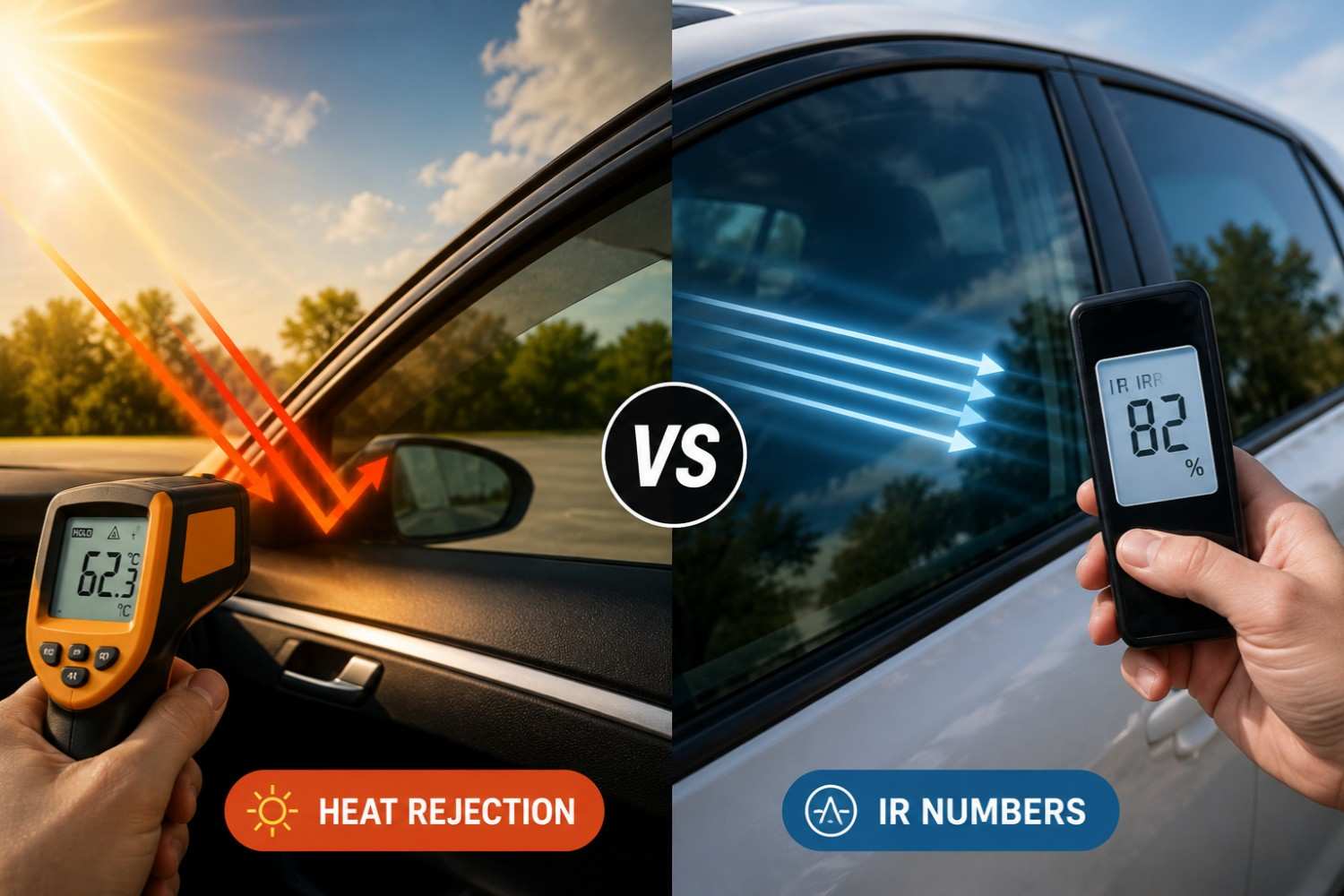
Interest in heat rejection window film has grown rapidly as buyers look for cooler cabins, better indoor comfort, and improved energy efficiency. Along with that, terms like TSER, IR rejection, and window tint heat rejection ratings are now seen across almost every product brochure. Many people come across “99% IR rejection” claims and assume that higher IR numbers always mean better cooling. The truth is, understanding heat rejection vs IR numbers involves much more than a single percentage figure.
More buyers are now comparing different window film performance metrics before making a decision. Even then, infrared rejection and overall heat reduction are often treated as the same thing. This is where TSER in window film stands out, since it measures total solar energy rejection instead of focusing only on infrared performance.
Here is what actually matters when selecting high-performance window film for vehicles, homes, and commercial spaces.
Heat Rejection vs IR Numbers (Quick Answer)
When evaluating heat rejection vs IR numbers, TSER matters more for everyday cooling performance. IR rejection only tells you how much infrared energy is blocked, while TSER measures the total solar heat rejected by the film. This gives a more practical idea of how cool the cabin or interior will actually feel. Darker films also do not always perform better than modern ceramic options.
Why Window Film Metrics Like TSER & IR Rejection Confuse Buyers
Window film specifications can often feel confusing since many brands use technical terms without properly explaining them. Terms like IRER vs IRR, infrared rejection percentages, and ceramic film ratings are frequently used in marketing to make films sound more advanced.
A major misunderstanding comes from “99% IR rejection” claims. Many people assume higher IR numbers mean better cooling, even though actual performance depends more on total solar heat rejection.
There is also a common belief that a darker tint means better cooling. In reality, modern heat rejection window film, especially ceramic films, can block more heat even in lighter shades.
The confusion increases when brands highlight selective infrared testing instead of full thermal performance data. Two films with similar IR rejection numbers can still perform very differently depending on their TSER values.
How Solar Heat Enters Your Car or Building (Explained)
For the window film heat rejection explained in proper context, it is important to first understand how sunlight transfers heat indoors.
Solar energy consists of three primary components that interact differently with glass surfaces and window films. Each component contributes to interior heat buildup in unique ways.
The following table shows the approximate contribution of each solar energy component:
| Solar Component | Approximate Contribution |
|---|---|
| Infrared Energy | ~53% |
| Visible Light | ~44% |
| UV Rays | ~3% |
Infrared radiation contributes the most solar heat, while visible light also adds significant interior heat after being absorbed by surfaces. UV rays contribute the least to heat, though they can still damage skin and interiors over time.
Looking only at infrared rejection does not give the complete picture. Good automotive window film heat reduction and architectural window film heat rejection come from reducing heat across the entire solar spectrum, not just infrared rays.
What is TSER in Window Film?
Understanding the TSER meaning is important when comparing premium window films.
TSER stands for Total Solar Energy Rejected. It measures how much total solar heat the film blocks or reflects before it enters the vehicle or building.
TSER includes:
- Infrared heat
- Heat from visible light
- UV radiation
This gives a more complete idea of cooling performance. IR-only testing looks at just one part of the heat, while TSER measures how much overall solar heat the film can reduce.
Most premium films offer TSER ratings between 50% and 70%, depending on the technology, film shade, and build quality. Ceramic and multi-layer sputtered films generally perform better than standard films.
A higher TSER percentage usually means a cooler cabin or indoor space since more solar heat is being rejected.
This is why many professionals consider TSER the best way to evaluate the best heat rejection window tint products available today.
What is IR Rejection (IRR) in Window Film?
Understanding the IRR meaning in window tint helps explain why infrared numbers in advertisements can sometimes feel misleading.
IR rejection measures how much infrared heat the film blocks. Since infrared energy creates the heat you feel directly on your skin, higher IR rejection can improve comfort in strong sunlight.
The confusion often comes from selective testing methods. Some brands measure infrared rejection only within a small wavelength range, typically around 900 to 1000 nanometers. This can make the IR figures look extremely high, even when the film’s overall heat rejection is not equally strong.
This is why an IR rejection window film claiming 99% IR rejection may still provide average cooling if its TSER is relatively low.
Infrared rejection can improve comfort under sunlight, though actual interior cooling depends on how well the film controls total solar heat.
TSER vs IR Rejection: Which Window Film Metric Matters More?
When comparing TSER vs infrared rejection, TSER is usually the more important number to consider.
Infrared rejection is still useful, especially for reducing the heat you feel directly from sunlight. However, overall cabin cooling, AC efficiency, and indoor comfort depend more on total solar energy rejection.
The comparison of TSER vs IRR below explains the difference more clearly:
| Metric | TSER | IRR |
|---|---|---|
| Measures | Total solar energy | Infrared only |
| Real-world cooling accuracy | High | Partial |
| Includes visible light heat | Yes | No |
| Manipulation risk | Low | Higher |
| Best use | Primary buying metric | Secondary validation metric |
This comparison shows that what matters in window film goes beyond high infrared rejection numbers. Total heat rejection gives a more accurate idea of how the film will actually perform in everyday conditions.
Does Darker Window Tint Mean Better Heat Rejection? Myth Explained
Many buyers still think a darker tint means better cooling. Modern window film technology shows that this is not always true.
Traditional dyed films mainly absorb heat. Darker shades absorb more solar energy into the glass, which can increase the glass temperature even if the cabin feels less bright due to reduced glare.
Modern ceramic technologies operate differently. Nano-ceramic particles reflect and disperse heat more efficiently without depending entirely on darkness levels.
Modern nano-ceramic films can reject more heat while remaining significantly clearer than traditional dark dyed window films.
This is why many premium clear window film heat rejection products now outperform darker conventional tints in thermal testing.
The relationship between darker tint vs heat rejection has evolved substantially with advanced film engineering.
Nano Ceramic vs Dyed Window Film: Heat Rejection Comparison
Film technology plays a major role in determining long-term thermal performance, durability, and visibility quality.
The following comparison highlights how ceramic technology differs from conventional dyed films:
| Feature | Nano Ceramic Film | Dyed Film |
|---|---|---|
| Heat Rejection | High | Moderate |
| TSER Performance | Excellent | Lower |
| UV Protection | Excellent | Basic |
| Clarity | Better | Lower |
| Fade Resistance | Better | Moderate |
| Signal Interference | None | Possible |
This comparison explains why nano ceramic window film heat rejection performance consistently outperforms older dyed technologies in both automotive and architectural applications.
What is VLT in Window Film and Why It Matters for Visibility
VLT stands for Visible Light Transmission. This metric measures how much visible light passes through the window film.
Higher VLT percentages indicate lighter films. Lower VLT percentages indicate darker films.
For example:
- 70% VLT looks close to clear glass
- 15% VLT looks much darker
VLT mainly affects visibility, privacy, glare control, and legal tint limits. Many states have VLT rules to maintain safe driving visibility.
VLT alone does not decide how much heat the film can block. In many cases, a lighter ceramic film can reject more heat than a darker dyed film, even while letting in more visible light.
Knowing this helps buyers understand that a darker tint does not always mean better cooling.
How to Choose the Right Window Film (Step-by-Step Guide)
Choosing the right window film means understanding key window film performance metrics and finding the right balance between visibility, heat rejection, legality, and durability.
Step 1: Choose Your Preferred VLT
Choose a tint shade based on the level of privacy you want, driving visibility, and the legal tint limits in your area.
Step 2: Compare TSER Ratings
After selecting the shade, check the TSER value. Higher TSER usually means better heat rejection and a cooler cabin.
Step 3: Evaluate Film Technology
Different films perform differently. Dyed, metallic, sputtered, and ceramic films all offer different levels of heat control. Ceramic films are often preferred for better heat rejection and clarity.
Step 4: Check UV Rejection
Films with around 99% UV rejection can help protect interiors from fading and reduce sun exposure inside the vehicle.
Step 5: Compare Warranty and Brand Reputation
Good installation matters just as much as the film itself. Trusted brands and professional installers usually offer better durability and warranty support.
Expert Tips: Best Window Film for Heat Rejection & Comfort
Professionals evaluating ceramic window film heat rejection performance generally prioritize TSER first and infrared rejection second.
Advanced ceramic films from brands like Global Hi-Tech Films are designed to offer a balanced combination of visibility, thermal performance, UV protection, and signal compatibility. Installation quality also plays a major role since a poor application can affect clarity and long-term durability.
Reading the complete specification sheet rather than focusing only on infrared claims helps in making a more informed choice.
Final Checklist Before Buying Window Film
Before making a final decision, it helps to check these important points:
- Prioritise TSER ratings
- Check VLT separately
- Do not depend only on IR percentages
- Make sure the tint is legally allowed
- Ceramic films are often worth considering
- Go through the warranty terms
- Choose a skilled installer
Following these steps can make how to choose window film much easier and more practical.
Conclusion: TSER vs IR — What You Should Focus On
Understanding heat rejection vs IR numbers helps buyers make better window film decisions. IR rejection only shows one part of the picture, while TSER gives a clearer understanding of the overall heat rejection.
A darker tint does not automatically block more heat. Many modern ceramic films are able to reduce heat effectively while still keeping the glass relatively light and clear.
Checking overall solar performance, comparing TSER values, and focusing on actual day-to-day performance can help buyers choose a film that delivers better comfort and efficiency over time.
FAQ on Heat Rejection, TSER & IR in Window Film
- What is TSER in window film? TSER stands for Total Solar Energy Rejected. It shows how much total solar heat the film blocks before it enters the interior.
- Is TSER more important than IR rejection? Yes, TSER gives a better idea of real-world cooling since it measures total heat rejection, not just infrared energy.
- What does IR rejection mean in window tint? IR rejection refers to how much infrared heat the film blocks, which mainly affects the heat felt directly on the skin.
- Why do some window films claim 99% IR rejection? Many brands measure IR rejection at selective wavelengths, which can produce very high numbers for marketing purposes.
- Does a darker window tint block more heat? Not always. Modern ceramic films can reject more heat than darker dyed films while still remaining relatively clear.
- Is ceramic window film better for heat rejection? Yes, ceramic films generally offer better heat rejection, UV protection, and clarity compared to traditional dyed films.
- What is the difference between TSER and VLT? TSER measures total heat rejection, while VLT measures how much visible light passes through the film.
- What should I prioritize when choosing window film for heat reduction? Start by checking TSER ratings, then compare film technology, VLT level, UV protection, and installation quality.
- Does higher TSER mean better AC performance? Yes, higher TSER generally improves AC performance by reducing total heat entry, though overall cooling also depends on factors like insulation and ambient temperature.
Read also
 Global Hi-Tech FilmsWindow Films
Does Automotive Window Film Affect GPS, Mobile Signals or Keyless Entry?
Does automotive window film affect GPS, mobile signals or keyless entry? Learn how film construction can influence vehicle connectivity and signals. Explore now.
 Global Hi-Tech FilmsArchitecture
Can Window Film Be Applied to Double-Pane and Low-E Glass?
Can window film be used on double-pane and Low-E glass? Learn about compatibility, glass types, thermal stress and key installation factors. Explore now.
 Global Hi-Tech FilmsWindow Films
Why Does Automotive Window Film Bubble, Peel or Change Color?
Discover why automotive window film bubbles, peels or changes color, the common causes of film failure, and how quality installation helps prevent damage.