

The History of Paint Protection Film: From Military Use to Modern Cars
Explore the history of paint protection film (PPF), from its early military applications to its evolution into a popular solution for protecting modern cars.
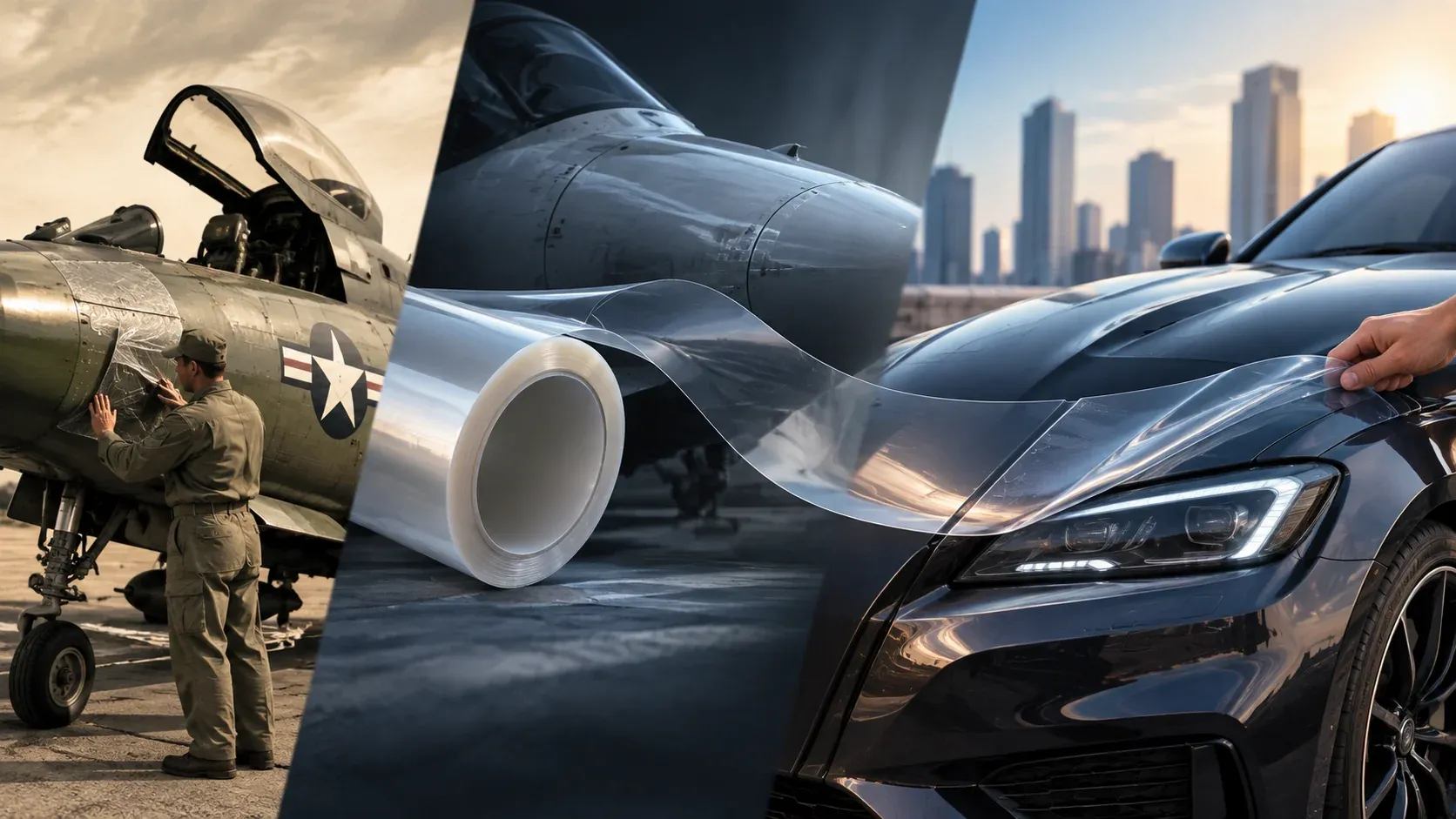
When you look at a pristine, glossy vehicle gliding down the highway, it is easy to assume its flawless finish is simply the result of careful washing. However, an invisible shield is often at work. The history of paint protection film is a fascinating journey of technological innovation, tracing a path from the harsh environments of military aviation in the 1960s to modern automotive applications. Understanding the origin of paint protection film reveals why it has become a popular option for automotive paint protection and how decades of material science have refined it to meet the demands of vehicle owners worldwide.
Why Was Paint Protection Film Invented? The Military Origins
To understand how paint protection film originated, we must look back to the 1960s. The technology was not originally developed for luxury vehicles or daily commuters. It was created to solve a critical, costly problem for military aviation.
Military helicopters operating in harsh environments, such as deserts and jungles, faced significant abrasion from sand, dust, and airborne debris. This wear was particularly severe along the vulnerable leading edges of the rotor blades. Over time, this erosion could affect the performance and service life of the blades, increasing maintenance requirements and replacement costs.
Engineers needed a solution that was lightweight, highly durable, and capable of conforming to complex curves without adding significant weight or disrupting visual inspections. In response, specialized polyurethane films were developed for military helicopter rotor blades. Often referred to as "helicopter tape" and sometimes described as "rhinoceros skin", this early material was thick and strictly functional rather than clear or aesthetically focused. Its successful use in military aviation demonstrated the potential of polyurethane film as a highly durable protective layer capable of withstanding extreme physical stress.
How Has Paint Protection Film Evolved Over the Years?
Following its success in military applications, innovators recognized the potential of this technology for civilian use. The transition from battlefield durability to automotive elegance required decades of material science advancements. To help visualize this progression, review the timeline below detailing how PPF evolved over the years to become the sophisticated product it is today.
| Era | Key Technological Advancement | Impact on Automotive Protection |
|---|---|---|
| 1960s | Adaptation of polyurethane protective films | Protected helicopter rotor blades from erosion |
| 1980s | Early automotive and motorsports applications | Expanded into motorsports and vehicle paint protection |
| 1990s | Refinement for consumer use | Improved clarity, flexibility, and commercial adoption |
| 2000s to Present | Advanced film construction and self-healing technology | Improved protection, appearance, and usability |
Early aromatic polyurethane formulations were more susceptible to UV-related degradation, which could cause yellowing and deterioration over time. The shift to aliphatic polyurethane significantly improved UV resistance and helped reduce the yellowing and degradation associated with earlier formulations. The shift to aliphatic polyurethane significantly improved UV resistance and helped reduce the yellowing and degradation associated with earlier formulations.
Additionally, the introduction of self-healing paint protection film changed the industry. Modern self-healing films use specially engineered top coats that can help minimize the appearance of minor scratches and swirl marks when exposed to heat, such as ambient or warm-water temperatures.
When Did PPF Become Popular for Cars?
For many years, paint protection film for cars was considered a niche product. It was reserved primarily for high-end exotic cars, supercars, and dedicated automotive collectors who demanded absolute perfection and were willing to pay a premium for it. However, PPF began gaining broader consumer adoption during the 2000s and 2010s.
As consumers became more aware of automotive paint protection and film technology continued to improve, demand expanded beyond luxury and enthusiast vehicles. Simultaneously, installation techniques improved dramatically. The introduction of computer-cut patterns meant installers could apply pre-measured, precision-cut pieces of film, reducing the need to cut directly on the vehicle's painted surface with a blade. This combination of better technology, increased consumer awareness, and safer installation methods drove the widespread popularity of PPF we see today.
How Modern Paint Protection Film Has Evolved
Today, automotive protection film is a far cry from the thick, functional tapes of the early days. Many modern PPF products utilize a sophisticated multi-layer construction. Depending on the product, modern PPF can feature a release liner, acrylic adhesive layer, polyurethane film layer, and a protective top coat designed to improve durability and resistance to environmental contaminants.
Industry innovators, including Global Hi-Tech Films, continue to advance this technology. Modern iterations focus on maximizing optical clarity, integrating robust self-healing top coats, and adding hydrophobic properties to simplify maintenance. These advancements have made paint protection film more practical for everyday vehicle owners while improving protection against road debris and minor surface damage.
Conclusion: From Military Protection to Modern PPF
The history of paint protection film shows how a technology developed for military aviation evolved into an increasingly sophisticated solution for automotive paint protection. From early polyurethane films used to protect helicopter components to today's optically clear, self-healing, and hydrophobic formulations, PPF has continued to evolve around the needs of modern vehicle owners. Companies like Global Hi-Tech Films are part of this ongoing development, bringing advanced film technologies to contemporary automotive applications and ensuring that vehicle finishes remain protected against the rigors of the road.
Frequently Asked Questions About PPF History
- How did paint protection film originate? Paint protection film originated in the 1960s from military aviation applications. Polyurethane films were developed to protect helicopter rotor blades from abrasion caused by sand, dust, and airborne debris.
- Why was paint protection film originally developed for the military? PPF was developed to provide a lightweight, durable protective layer for helicopter components exposed to severe abrasion and harsh operating conditions. The technology helped protect vulnerable surfaces from wear and extend their service life.
- When was paint protection film first used on cars? After its military applications, protective film technology gradually moved into motorsports and automotive applications. Through the 1980s and 1990s, improvements in film construction, clarity, and adhesives helped establish PPF as an automotive paint protection solution.
- How has paint protection film changed over time? PPF has evolved from thick, functional polyurethane films into thinner and more sophisticated products with improved optical clarity, adhesives, UV resistance, self-healing top coats, and hydrophobic properties.
- What is the difference between old and modern paint protection film? Early protective films were primarily designed for durability and could be thicker and less visually refined. Modern PPF is generally clearer, more flexible, and more resistant to UV exposure, environmental contaminants, and minor surface damage.
- When did paint protection film become popular for everyday cars? PPF began gaining broader consumer adoption during the 2000s and 2010s as film technology improved, installation became more precise, and awareness of automotive paint protection increased beyond luxury and enthusiast vehicles.
- What is self-healing paint protection film? Self-healing PPF uses specially engineered top coats that can help minimize the appearance of minor scratches and swirl marks when exposed to heat, such as ambient or warm-water temperatures.
- Is modern paint protection film useful for everyday cars? Yes. Modern PPF can help protect everyday vehicles from common hazards such as stone chips, road debris, bug splatter, and minor surface damage while helping preserve the appearance of the original paint.
Read also
 Global Hi-Tech FilmsWindow Films
Does Automotive Window Film Affect GPS, Mobile Signals or Keyless Entry?
Does automotive window film affect GPS, mobile signals or keyless entry? Learn how film construction can influence vehicle connectivity and signals. Explore now.
 Global Hi-Tech FilmsArchitecture
Can Window Film Be Applied to Double-Pane and Low-E Glass?
Can window film be used on double-pane and Low-E glass? Learn about compatibility, glass types, thermal stress and key installation factors. Explore now.
 Global Hi-Tech FilmsWindow Films
Why Does Automotive Window Film Bubble, Peel or Change Color?
Discover why automotive window film bubbles, peels or changes color, the common causes of film failure, and how quality installation helps prevent damage.