

How Desert Conditions Affect Vehicle Paint and What Protection Works Best
Learn how desert heat, UV rays, sand and dust damage vehicle paint. Compare PPF and ceramic coating to choose the best long-term paint protection.
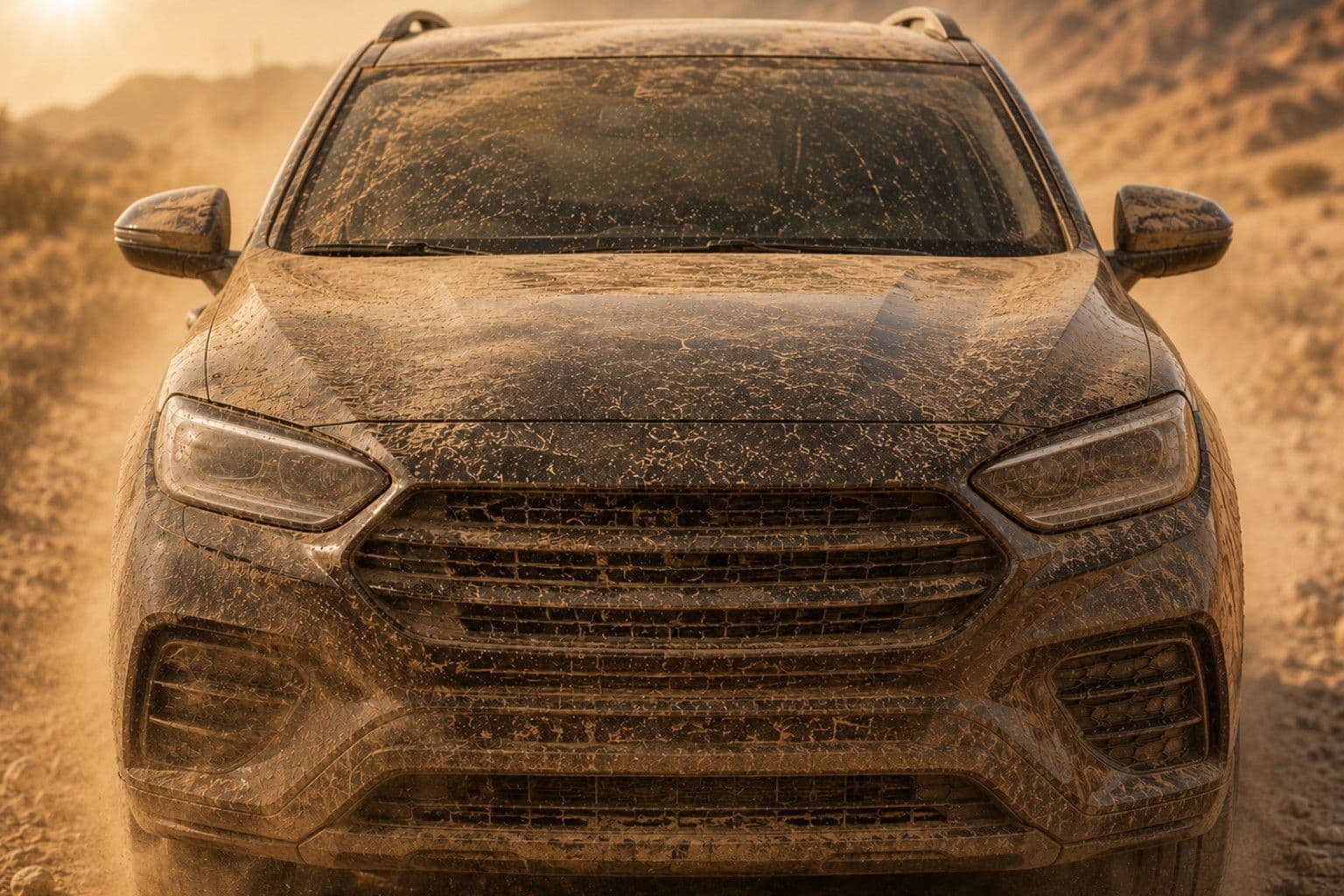
In desert conditions, automotive paint faces constant UV radiation, heat exposure, blowing sand, and road debris. The effects build gradually, which is why many owners invest in desert car paint protection.
Understanding how desert heat affects car paint also explains the gradual appearance of sand abrasion, oxidation, paint fading, and clear coat damage. These issues can affect vehicles of any paint color.
Effective vehicle paint protection comes from using the right solution. Paint Protection Film (PPF), ceramic coating, sealants, waxes, and a breathable car cover each protect against different types of damage.
Here is a closer look at the damage caused by desert conditions and the protection methods that work best over the long term.
How Desert Conditions Affect Vehicle Paint: Quick Answer
Desert conditions expose vehicle paint to intense UV radiation, extreme heat, sand, dust, and road debris, leading to oxidation, fading, scratches, and chips. For effective car paint protection in desert conditions, PPF provides the best defense against physical damage, while ceramic coating improves UV resistance, stain protection, and easier cleaning. Together, they offer the most complete paint protection.
How Desert Heat, Sand and UV Rays Damage Car Paint
The damage seen on vehicles in desert climates usually comes from several environmental factors acting together instead of a single source. Identifying each one makes it easier to choose the right form of paint protection.
The factors below show why vehicle paint deteriorates faster in hot, dry environments.
UV Radiation Causes Paint Fading and Clear-Coat Damage
Constant sunlight exposes the vehicle to high levels of UV radiation, gradually breaking down the clear coat. As protection diminishes, the surface begins showing paint fading, chalkiness, reduced gloss, and early signs of car paint oxidation protection becoming compromised.
Extreme Heat Accelerates Car Paint Deterioration
Strong sunlight heats the vehicle far beyond the outside temperature. Day after day, the paint becomes easier to stain and shows signs of wear much sooner.
Sand and Dust Cause Scratches and Swirl Marks
Fine sand moves across painted surfaces like sandpaper. Over time, sand abrasion and dust damage leave small scratches and swirl marks, especially if the surface is wiped before washing.
Road Debris Causes Paint Chips and Impact Damage
Loose stones, gravel, and other road debris often strike the front of the vehicle during highway driving. Even small impacts can chip the paint and expose the layer underneath.
Temperature Changes Weaken the Paint and Clear Coat
Paint reacts to the sharp temperature shifts common in desert climates. Daily cycles of expansion and contraction slowly reduce the strength of the protective finish.
Dry Wiping Makes Sand and Dust Damage Worse
A dusty car may not appear heavily soiled. Even so, wiping the surface before rinsing can drag abrasive particles across the paint, causing swirl marks with repeated cleaning.
As the damage builds up, protecting the paint early is far easier than repairing it later.
Signs of Car Paint Damage in Desert Conditions
Small signs of paint damage often appear long before serious deterioration.
- Paint appears faded, dull, or uneven.
- The clear coat loses its original gloss.
- Fine swirl marks become visible under sunlight.
- The hood and front bumper develop stone chips.
- Headlights become cloudy or lightly pitted.
- Water spots become increasingly difficult to remove.
- Bird droppings, bug splatter, and pollutants can stain the paint much faster.
- Dark-colored vehicles tend to show scratches, stains, and other imperfections sooner than lighter finishes.
Identifying these symptoms early makes car paint protection in desert conditions more effective before permanent damage develops.
Best Car Paint Protection for Desert Conditions
Desert conditions affect paint in different ways, so each protection option serves a different purpose.
| Protection Type | Best For | Limitation |
|---|---|---|
| Paint Protection Film | Sand, stone chips, scratches, road debris | Higher upfront cost |
| Ceramic Coating | UV, stains, dust, water spots, easier cleaning | Does not stop stone chips |
| PPF + Ceramic Coating | Maximum physical and surface protection | Needs professional application |
| Paint Sealant | Short-term UV and gloss support | Needs frequent reapplication |
| Car Wax | Temporary shine | Weak in high heat |
| Breathable car cover | Parked vehicles | Must be clean and well-fitted |
Each option offers unique advantages, although long-term protection usually involves combining more than one solution.
Paint Protection Film for Sand, Scratches and Stone Chips
Paint Protection Film for cars provides strong protection against sand, stone chips, and other physical damage in desert conditions.
The transparent polyurethane film helps protect car paint from sand, gravel, and other debris before they reach the factory paint. Premium PPF also features self-healing technology that helps eliminate light scratches when exposed to heat.
The hood, front bumper, fenders, side mirrors, door edges, and rocker panels see the most wear during desert driving. UV-resistant films help protect car paint from UV rays, reducing paint fading and clear coat damage, while full-body PPF for desert conditions provides coverage beyond high-impact areas.
Ceramic Coating for Desert Heat, UV Rays and Dust
Ceramic coating for desert heat adds an extra layer of surface protection against daily exposure.
The coating bonds with the paint, creating a smooth, hydrophobic surface that helps water, dust, and dirt slide off more easily. This also makes regular washing easier and reduces contaminant buildup.
Ceramic coatings also provide UV paint protection for cars and improve resistance to acid rain, bird-dropping stains, bug splatter, and pollutants. Although ceramic coatings contribute to car paint oxidation protection, they cannot absorb impacts from gravel or prevent chips the way Paint Protection Film does.
PPF vs Ceramic Coating for Desert Conditions
A quick comparison shows where each option performs best.
| Factor | PPF | Ceramic Coating |
|---|---|---|
| Sand abrasion | Strong protection | Limited protection |
| Stone chips | Strong protection | Poor protection |
| UV exposure | Good protection | Good protection |
| Stain resistance | Good protection | Strong protection |
| Easy cleaning | Good | Excellent |
| Gloss enhancement | Moderate to strong | Strong |
| Scratch resistance | Strong for light scratches | Limited |
| Best use | Physical impact defense | Surface and chemical defense |
There isn't a single answer for every vehicle. Paint protection film for cars is aimed at physical damage, while ceramic coating focuses on the paint surface. The right choice depends on how and where the vehicle is driven.
Should You Combine PPF and Ceramic Coating?
PPF and ceramic coating protect the paint in different ways. Used together, they cover both impact damage and surface contamination.
The film helps absorb chips, scratches, and sand damage on car paint, while ceramic coating creates a slick surface that makes dust and contaminants easier to wash away. Applying ceramic coating over professionally installed PPF also helps keep the vehicle cleaner between washes.
This combination works well for vehicles regularly driven in desert conditions.
Solutions from Global Hi-Tech Films combine these technologies to provide balanced protection against both physical damage and everyday environmental exposure, making them well suited for demanding desert conditions.
How to Maintain Car Paint in Hot and Dusty Conditions
Proper maintenance helps protective products perform as intended.
- Avoid dry-wiping a dusty vehicle.
- Rinse the paint before touching the surface.
- Wash early in the morning or later in the evening.
- Keep the vehicle out of direct sunlight while washing.
- Use a pH-balanced automotive shampoo.
- Dry the surface with clean microfiber towels.
- Clean off bird droppings and bug splatter as soon as possible.
- Use a clean, fitted breathable car cover when parking outdoors.
- Avoid harsh chemicals on PPF or ceramic coating.
- Follow manufacturer and installer maintenance recommendations.
Looking after the protective layer helps keep the paint in better condition.
Conclusion: Best Long-Term Car Paint Protection for Desert Climates
Daily exposure to sun, blowing sand, dust, and road debris slowly changes the look of a vehicle's paint. What begins as light swirl marks or fading can eventually lead to stains, chips, and clear coat damage, which is why desert car paint protection matters in harsh climates.
Many desert vehicles use more than one form of paint protection. PPF protects against sand and stone chips. Ceramic coating keeps the surface easier to clean, while waxes and sealants provide only short-term protection.
When used together, PPF and ceramic coating cover different types of paint damage, making the combination one of the best car paint protection for hot climates for vehicles driven in demanding conditions.
FAQs About Car Paint Protection in Desert Conditions
- How do desert conditions damage vehicle paint? Daily exposure to sun, heat, sand, and dust gradually affects the paint. The finish can become dull, scratched, faded, or chipped with time.
- Can sand scratch car paint? It can. Fine sand particles may leave light scratches and swirl marks, especially if the dust is wiped off instead of rinsed away first.
- Does extreme heat fade car paint? It does over time. Long hours in strong sunlight can reduce the paint's colour and gloss, particularly without added protection.
- What is the best paint protection for desert conditions? PPF offers the best protection against sand and stone chips, while ceramic coating helps against UV rays, stains, and dust.
- Is PPF better than ceramic coating for sand damage? Yes. PPF absorbs impacts from sand and road debris, whereas ceramic coating mainly protects the paint surface.
- Can ceramic coating protect against UV rays? Yes. Ceramic coating helps reduce UV-related fading and makes the paint easier to maintain.
- Should I use PPF and ceramic coating together? Yes. PPF protects against physical damage, while ceramic coating adds protection against UV exposure, stains, and dirt.
- Is wax enough to protect car paint in hot climates? Not for long. Heat wears wax down fairly quickly, so it works better as a temporary layer than a long-term solution.
- How often should I wash a car in dusty conditions? There isn't a fixed schedule. Wash it once dust starts building up, and always rinse the surface before touching the paint.
- What areas of the car should get PPF first? Start with the parts that take the most impact, such as the front bumper, hood, fenders, side mirrors, door edges, and rocker panels.
Read also
 Global Hi-Tech FilmsWindow Films
Does Automotive Window Film Affect GPS, Mobile Signals or Keyless Entry?
Does automotive window film affect GPS, mobile signals or keyless entry? Learn how film construction can influence vehicle connectivity and signals. Explore now.
 Global Hi-Tech FilmsArchitecture
Can Window Film Be Applied to Double-Pane and Low-E Glass?
Can window film be used on double-pane and Low-E glass? Learn about compatibility, glass types, thermal stress and key installation factors. Explore now.
 Global Hi-Tech FilmsWindow Films
Why Does Automotive Window Film Bubble, Peel or Change Color?
Discover why automotive window film bubbles, peels or changes color, the common causes of film failure, and how quality installation helps prevent damage.