

How to Stop Heat from Windows Without Making a Room Dark
Learn how to stop heat from windows without making rooms dark. Explore practical ways to reduce solar heat while maintaining natural light indoors.
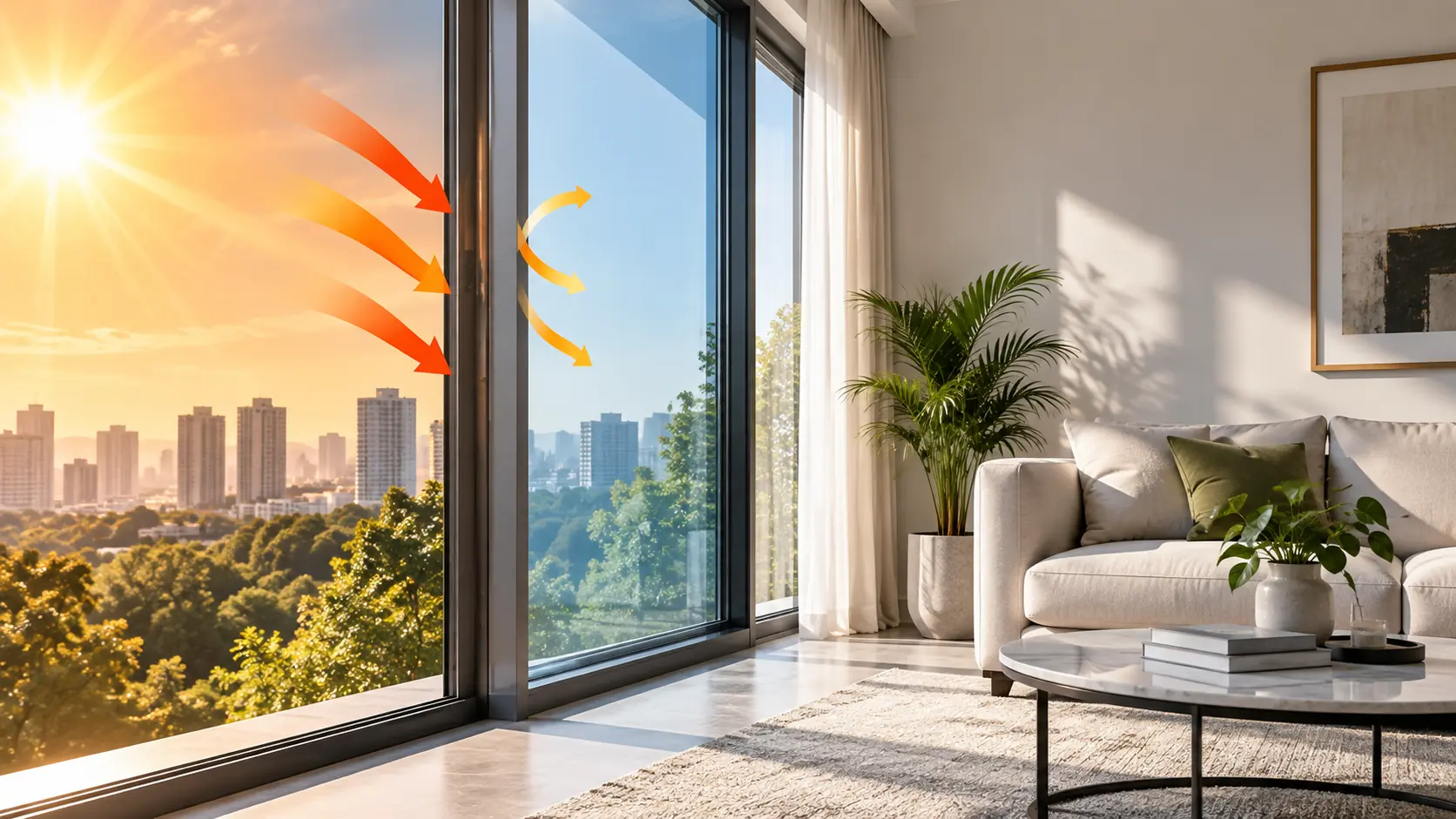
Balancing natural light with indoor comfort is a common challenge for homeowners and facility managers. Windows are essential for brightening a space, but they are also the primary entry point for solar energy. If you are wondering how to stop heat from windows without making a room dark, the solution lies in targeting specific wavelengths of light. By reducing infrared and ultraviolet radiation while allowing much of the visible light spectrum to pass through, you can maintain a bright, naturally lit environment while reducing solar heat gain. This guide explores the most effective strategies to achieve this balance.
Why Windows Make Rooms Hot: Understanding Solar Heat Gain
To understand how to reduce heat from windows while preserving natural illumination, it helps to understand the composition of solar energy. Sunlight reaching your windows consists of three main components:
- Visible Light: The portion of the spectrum that allows us to see and brightens the room.
- Infrared Radiation: The invisible energy that we feel as heat.
- Ultraviolet (UV) Rays: Invisible rays that cause fading and degradation of furniture, flooring, and fabrics.
Standard glass allows both visible light and a significant amount of infrared heat to pass through. Once inside, this heat is absorbed by surfaces and re-radiated into the room, creating a greenhouse effect. The goal of effective heat control is to reduce solar heat gain while maintaining as much useful visible light as possible.
Best Ways to Block Heat from Windows Without Blocking Light
To effectively reduce window heat without sacrificing your view or natural illumination, consider these proven architectural and interior solutions.
Apply Spectrally Selective Window Films
High-performance window films can reduce solar heat gain while maintaining substantial visible light transmission. Depending on the film, the technology can selectively reduce infrared and UV radiation while allowing much of the visible light to pass through. This makes high-VLT films useful for spaces where maintaining natural daylight and outside views is important.
Architectural window films from Global Hi-Tech Films are designed to help reduce solar heat while maintaining natural light, with performance varying by film specification and glass type. Certain high-VLT films can also maintain a relatively clear appearance and good outward visibility, making them an excellent choice for spaces where heat reduction and natural light are both priorities.
Install Light-Filtering Cellular Shades
Cellular shades, also known as honeycomb shades, offer an excellent interior solution. Their unique geometric design traps air in distinct pockets, creating a powerful thermal barrier directly against the glass.
By choosing a light-filtering fabric rather than a blackout material, you can diffuse harsh, direct sunlight into a soft, bright glow. This approach blocks radiant heat from entering the living space while still allowing ample ambient light to illuminate the room.
Use Exterior Solar Screens
For maximum heat rejection, addressing the solar energy before it even reaches the glass is highly effective. Exterior solar screens are mounted on the outside of the window frame. They are designed to intercept, reflect and absorb a portion of solar radiation before it reaches the glass.
Because they are installed on the exterior, the interior of the room remains bright, and you can still see through them. They function similarly to standard insect screens but are specifically engineered for thermal control.
Upgrade to Low-E Glass or Secondary Glazing
If you are undertaking a renovation, replacing standard windows with Low-Emissivity (Low-E) glass is a permanent solution. Low-E glass features a microscopic metallic oxide coating built directly into the pane. This coating reflects infrared heat back to its source while remaining highly transparent to visible light.
For those who cannot replace existing windows, clear magnetic interior acrylic panels offer a viable alternative. These secondary glazing solutions create a thermal air buffer similar to double-pane windows, reducing heat transfer without blocking natural light.
Utilize External Awnings or Overhangs
Architectural shading is one of the oldest and most effective methods for climate control. External awnings or roof overhangs shield your windows from the high, intense midday sun. Because they block direct solar rays while still allowing indirect, ambient light from the sky and horizon to enter, they keep the room cool and bright simultaneously.
What to Look for in a Window Film That Blocks Heat but Lets in Light
When choosing a window film for heat reduction, look beyond how dark the film appears. For homeowners and facility managers looking for a window film to reduce heat without significantly reducing daylight, high-VLT solar control films can be worth considering. Key specifications include Visible Light Transmittance (VLT), Solar Heat Gain Coefficient (SHGC), infrared rejection and UV protection. A higher VLT can help maintain natural daylight, while a lower SHGC generally indicates better control of solar heat gain. The right combination depends on the building, window orientation, existing glass and climate. Consulting with a professional ensures the selected film meets both your aesthetic and thermal performance goals.
Comparing Ways to Reduce Heat from Windows Without Blocking Light
To help you evaluate the most effective methods to block heat from windows without blocking light, review the comparison table below detailing the performance, light retention, and installation requirements of each strategy.
| Strategy | Heat Reduction Capability | Light Retention | Installation Complexity |
|---|---|---|---|
| Spectrally Selective Window Film | High | Excellent (Relatively Clear) | Professional Installation |
| Light-Filtering Cellular Shades | Moderate to High | Good (Diffused Light) | Easy (Typically DIY) |
| Exterior Solar Screens | High | Good (Slight Tint) | Moderate (Exterior Mounting) |
| Low-E Window Replacement | Very High | Excellent (High Transparency) | High (Professional Installation) |
| External Awnings or Overhangs | High | Excellent (Indirect Light) | High (Structural Installation) |
Choosing the Right Solution for Window Heat Control
Learning how to stop heat from windows without making a room dark starts with controlling solar heat gain without unnecessarily reducing visible light. Solutions such as high-VLT window films, light-filtering shades, exterior solar screens and Low-E glass can help manage heat while maintaining a bright indoor environment. The right option depends on the window type, building orientation, climate and desired level of light transmission. By selecting the appropriate heat-reducing window film or shading solution, you can enhance your indoor comfort and protect your interior furnishings for years to come.
FAQs About Reducing Heat from Windows
- How can I stop heat from windows without blocking natural light? High-VLT window films, light-filtering shades, exterior solar screens and suitable Low-E glass can help reduce solar heat gain while allowing natural light into the room. The right option depends on the glass type, window orientation and desired level of light transmission.
- Do window films reduce heat without making a room dark? Yes. High-VLT and spectrally selective window films are designed to reduce solar heat gain while allowing a substantial amount of visible light to pass through. Their performance varies by product, glass type and installation conditions.
- What type of window film is best for reducing heat? Solar control and spectrally selective window films are designed to reduce solar heat gain while maintaining natural light. When choosing a film, consider specifications such as Visible Light Transmittance (VLT), Solar Heat Gain Coefficient (SHGC), infrared rejection and UV protection.
- How does window film block heat but let light in? Window film can selectively control different parts of the solar spectrum. Certain films reduce infrared and UV radiation while allowing much of the visible light spectrum to pass through, helping control heat without significantly reducing daylight.
- Can clear window film reduce heat from windows? Yes. Some high-VLT window films can reduce solar heat gain while maintaining a relatively clear appearance and good outward visibility. The amount of heat reduction and light transmission depends on the specific film and glass combination.
- What is the best window treatment to block heat but let light in? High-VLT window film is a strong option when maintaining natural light and outward visibility is important. Other options include light-filtering cellular shades, exterior solar screens and Low-E glass, depending on the building and window configuration.
- Does window film work on all types of glass? Film compatibility depends on the specific product and glass configuration. Single-pane, double-pane, Low-E, tempered and other glass types may have different requirements, so the manufacturer's specifications should be checked before installation.
- What should I look for in a window film that reduces heat? Key specifications include Visible Light Transmittance (VLT), Solar Heat Gain Coefficient (SHGC), infrared rejection and UV protection. A higher VLT can help preserve natural light, while a lower SHGC generally indicates better solar heat control.
Read also
 Global Hi-Tech FilmsWindow Films
Does Automotive Window Film Affect GPS, Mobile Signals or Keyless Entry?
Does automotive window film affect GPS, mobile signals or keyless entry? Learn how film construction can influence vehicle connectivity and signals. Explore now.
 Global Hi-Tech FilmsArchitecture
Can Window Film Be Applied to Double-Pane and Low-E Glass?
Can window film be used on double-pane and Low-E glass? Learn about compatibility, glass types, thermal stress and key installation factors. Explore now.
 Global Hi-Tech FilmsWindow Films
Why Does Automotive Window Film Bubble, Peel or Change Color?
Discover why automotive window film bubbles, peels or changes color, the common causes of film failure, and how quality installation helps prevent damage.