

PET vs TPU vs EPU Windshield Protection Film: Complete Comparison Guide
Discover PET, TPU, and EPU windshield films. Compare durability, impact resistance, clarity, and performance to choose the best protection for your vehicle.
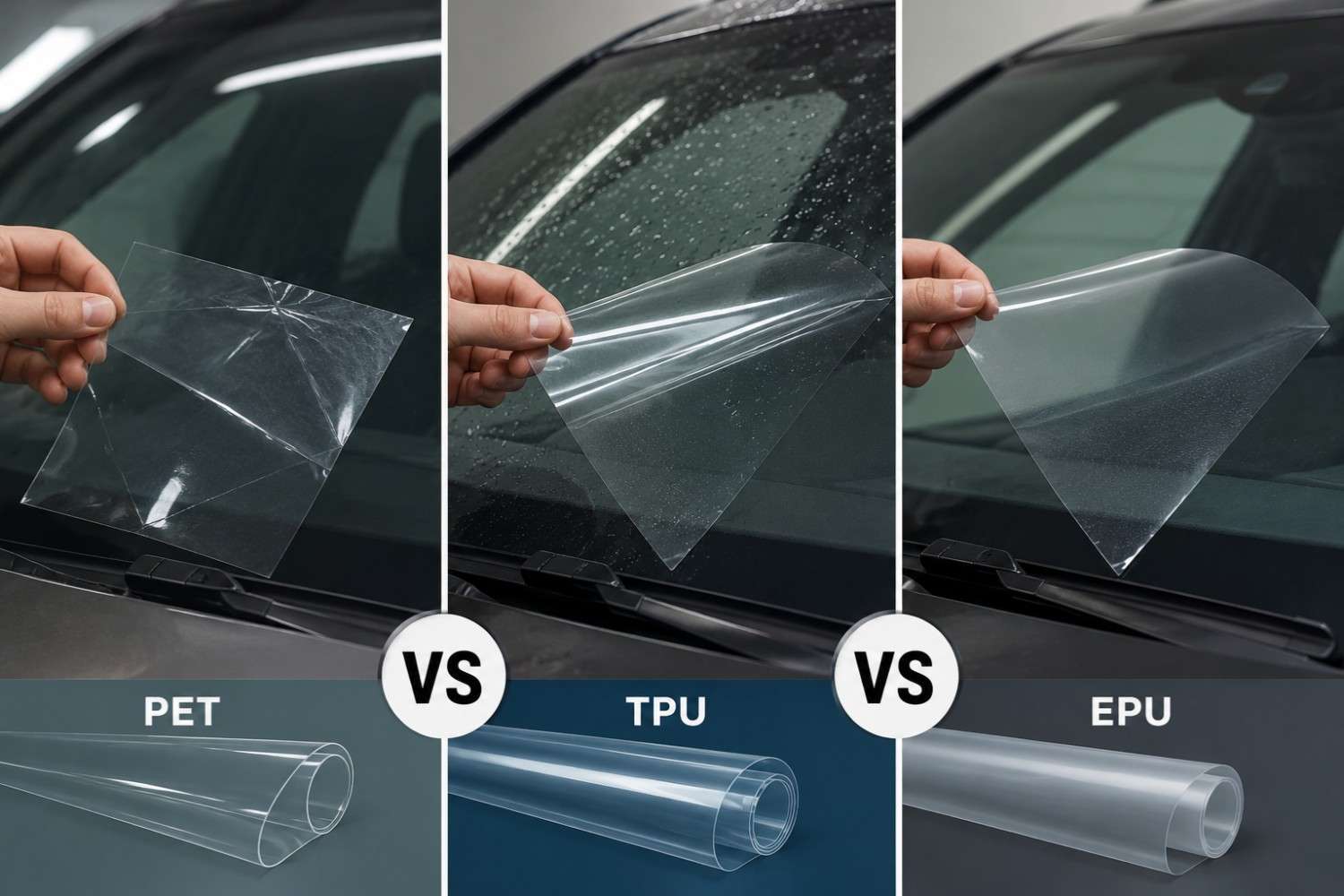
Choosing the right PET vs TPU vs EPU windshield protection film is no longer only about scratch protection. Visibility, impact resistance, self-healing ability, and durability now play a bigger role, especially as windshield repair costs rise and curved glass becomes more common in modern cars.
Many car owners find it difficult to understand the difference between PET windshield protection film, TPU windshield protection film, and EPU windshield film since each one behaves differently on the road. Some films are designed mainly for scratch protection, while others offer better flexibility and stronger impact absorption.
This windshield protection film comparison explains how these materials differ and which one delivers a better mix of protection, visibility, and durability for everyday driving.
PET vs TPU vs EPU Windshield Protection Film (Quick Answer)
PET vs TPU vs EPU windshield protection film mainly differs in protection, flexibility, and clarity. PET is a lower-cost option for scratch resistance, TPU offers better impact handling, and EPU provides improved visibility with stronger self-healing performance.
Why Windshield Protection Film Material Matters for Safety & Durability
Windshields deal with flying stones, road debris, dust, and regular wiper use every day. Over time, even a tiny chip can grow into a crack that may require full windshield replacement.
The film material influences durability, flexibility, visibility, and scratch recovery. Curved windshields also require films that fit evenly without lifting from the edges.
An unsuitable film material may reduce both protection quality and film lifespan.
What is PET Windshield Protection Film?
PET windshield protection film is made from Polyethylene Terephthalate, a rigid polyester-based material known for its smooth finish and strong scratch resistance.
PET films are budget-friendly and offer excellent optical clarity on flatter glass surfaces. Their rigid structure creates a glass-like feel and performs well against light scratches and wiper marks.
PET is less flexible than TPU and EPU. Installers often need heat-shrinking techniques to properly fit the curved windshield protection film. Heavy impacts can sometimes crack the film instead of dispersing the force.
Best For
- Buyers looking for an affordable option
- Flat windshield surfaces
- Everyday windshield protection
- People are mainly concerned about scratches
PET works well as a basic and practical option for regular windshield protection.
What is TPU Windshield Protection Film?
TPU windshield protection film is made using Thermoplastic Polyurethane, a flexible material known for better impact absorption and durability.
Compared to PET, TPU adjusts more easily to curved windshields due to its flexible nature. This helps achieve smoother installation with lower chances of distortion.
One of the biggest TPU windshield film benefits is self-healing capability. Minor scratches and swirl marks can disappear with heat exposure, helping the film maintain a cleaner appearance.
TPU also offers excellent stone-chip protection, anti-yellowing performance, and better durability under harsh weather conditions.
Best For
- Daily drivers
- Highway usage
- Curved windshield protection
- Long-term durability
In the TPU vs PET windshield film comparison, TPU performs better in impact resistance and flexibility.
What is an EPU Windshield Protection Film?
EPU windshield protection film uses Elastomeric Polyurethane technology, considered a next-generation premium material.
EPU combines TPU-like flexibility with enhanced clarity, improved durability, and faster self-healing performance. The material is designed for high-end automotive applications where visibility and finish quality matter most.
Another major advantage is reduced orange-peel texture, which helps create a cleaner glass-like finish.
EPU films also provide stronger edge stability and better resistance to curling over time.
Best For
- Luxury vehicles
- Premium windshield protection
- Buyers prioritising optical clarity
- Long-term ownership
In most TPU vs EPU windshield film comparisons, EPU is positioned as the premium option.
PET vs TPU vs EPU Windshield Protection Film: Full Comparison Table
Each material performs differently in terms of flexibility, durability, and overall protection. The table below gives a simple overview of the PET vs TPU vs EPU comparison.
| Feature | PET | TPU | EPU |
|---|---|---|---|
| Material Type | Rigid Polyester | Flexible Polyurethane | Premium Elastic Polyurethane |
| Flexibility | Low | High | Ultra-High |
| Impact Resistance | Moderate | Excellent | Superior |
| Scratch Resistance | Excellent | Good | Very Good |
| Self-Healing | Rare | Yes | Faster / Instant |
| Curved Glass Compatibility | Limited | Excellent | Excellent |
| Optical Clarity | High | Crystal Clear | Premium Glass-Like |
| Lifespan | 1–3 Years | 3–5 Years | 5+ Years |
| Cost | Low | Medium | Premium |
This windshield film material comparison shows TPU as the balanced option, while EPU focuses on premium long-term performance.
Which Film Works Best for Curved Windshields? (PET vs TPU vs EPU)
Curved windshields in modern cars can make film fitting more difficult.
PET does not bend as easily, so heat shrinking is often needed during installation. Poor fitting may sometimes result in edge lifting or distortion.
During an EPU vs TPU comparison, both films are usually considered better for curved windshields since they fit complex glass shapes more easily and maintain better edge hold over time.
Flexible materials generally perform better on modern curved windshields.
Impact Resistance vs Scratch Protection: Which Film Performs Better?
Windshield film’s scratch resistance and impact resistance work differently, although they are often confused.
PET has a tougher outer surface that helps reduce light scratches and dust marks. TPU is more flexible, which improves the windshield film’s impact resistance during small road impacts.
EPU combines strong impact protection with faster self-healing recovery.
The table below highlights the key differences.
| Performance Type | PET | TPU | EPU |
|---|---|---|---|
| Rock Chip Protection | Moderate | Excellent | Superior |
| Wiper Scratch Resistance | Excellent | Good | Very Good |
| Shock Absorption | Low | High | Very High |
| Self-Healing Recovery | Minimal | Good | Fast |
This comparison explains why self-healing windshield protection film technology has become increasingly popular among highway drivers.
Optical Clarity & Visibility: Which Windshield Film Is Clearer?
Visibility remains one of the most important factors in any premium windshield protection film.
PET films provide good clarity on flatter glass surfaces. Curved windshields, however, may show slight distortion if installation is not done properly.
TPU offers crystal-clear visibility with better adaptability on curved glass. EPU further improves optical performance with a smoother glass-like finish and minimal orange-peel effect.
Higher-quality polyurethane films also maintain more consistent visibility during night driving.
Windshield Film Lifespan Comparison: PET vs TPU vs EPU
The lifespan of a windshield protection film depends on material quality, installation, maintenance, and weather exposure.
PET films usually last around 1 to 3 years. TPU films generally offer 3–5 years of durability and provide better resistance against weather damage and yellowing.
EPU films can exceed 5 years due to improved anti-yellowing technology and better edge stability.
Premium materials usually maintain clarity and performance more effectively over extended usage.
Which Windshield Protection Film Offers the Best Value?
The best windshield protection film material depends on the balance between price and long-term performance.
PET remains the most affordable option for basic protection. TPU offers the best balance of durability, impact resistance, flexibility, and pricing, making it suitable for most drivers.
EPU is usually priced higher than other options, though many luxury car owners prefer it for its clearer visibility and longer usable life.
Over time, better durability and lower replacement needs can often offer better value than focusing only on the initial cost.
PET vs TPU vs EPU: Which Windshield Protection Film Should You Choose?
The right film depends on the type of vehicle, driving conditions, and the kind of protection needed.
Choose PET If:
- Budget-friendly protection is preferred
- The windshield has a flatter shape
- Strong scratch resistance is important
Choose TPU If:
- A good balance of flexibility and durability is needed
- Highway driving is common
- The windshield has deeper curves or contours
Choose EPU If:
- The vehicle belongs to the luxury segment
- Maximum optical clarity matters most
- Long-term premium performance is the priority
This windshield protection film durability comparison clearly shows that flexible polyurethane-based materials are better suited for modern vehicles.
Expert Tips: Choosing the Right Windshield Protection Film
For most vehicles, the best windshield protection film for cars made with TPU offers a balance of durability, clarity, flexibility, and impact protection.
EPU is considered a more premium option for those looking for better optical clarity and quicker self-healing performance. PET works well for basic protection and flatter windshields.
Proper installation also makes a big difference in film durability, visibility, and overall long-term performance.
Conclusion: Which Windshield Protection Film Is Best?
PET, TPU, and EPU all have different strengths. PET is usually chosen for affordable scratch protection, TPU offers a good mix of flexibility and impact protection, while EPU is known for better windshield protection film clarity and premium performance.
Modern vehicles today use more curved windshields, making flexible films a more practical choice. The right film also helps maintain clear visibility and better windshield protection over time.
FAQ on PET vs TPU vs EPU Windshield Protection Film
- What is the difference between PET, TPU, and EPU windshield protection film? PET mainly offers scratch protection; TPU provides better flexibility and impact resistance; and EPU focuses on premium clarity and advanced performance.
- Which windshield protection film is best for curved windshields? TPU and EPU are usually better for curved windshields because they are more flexible and can more easily fit complex shapes.
- Is TPU better than PET for windshield protection? TPU is generally considered better for overall protection as it handles impact and curved surfaces more effectively than PET.
- What are the advantages of EPU windshield protection film? EPU offers excellent clarity, faster self-healing, and a more premium finish compared to standard films.
- Which windshield film has the best self-healing properties? EPU usually delivers the best self-healing performance, especially for light scratches and swirl marks.
- Does PET windshield film crack under impact? PET is more rigid than TPU and may crack or chip under strong impact over time.
- How long does TPU windshield protection film last? A good-quality TPU windshield film can typically last around 3 to 5 years with proper care.
- Which windshield protection film offers the best optical clarity? EPU is often preferred for the highest optical clarity and a cleaner viewing experience.
- Is windshield protection film removable without damage? Yes, windshield protection film can be removed safely without damaging the glass. High-quality films peel off cleanly, especially when removed by professionals using proper techniques.
Read also
 Global Hi-Tech FilmsWindow Films
Does Automotive Window Film Affect GPS, Mobile Signals or Keyless Entry?
Does automotive window film affect GPS, mobile signals or keyless entry? Learn how film construction can influence vehicle connectivity and signals. Explore now.
 Global Hi-Tech FilmsArchitecture
Can Window Film Be Applied to Double-Pane and Low-E Glass?
Can window film be used on double-pane and Low-E glass? Learn about compatibility, glass types, thermal stress and key installation factors. Explore now.
 Global Hi-Tech FilmsWindow Films
Why Does Automotive Window Film Bubble, Peel or Change Color?
Discover why automotive window film bubbles, peels or changes color, the common causes of film failure, and how quality installation helps prevent damage.