

Safety Film vs Tempered Glass: What’s Better?
Compare safety film vs tempered glass for safety, strength, security, cost and installation. Learn the key differences and choose the right option.
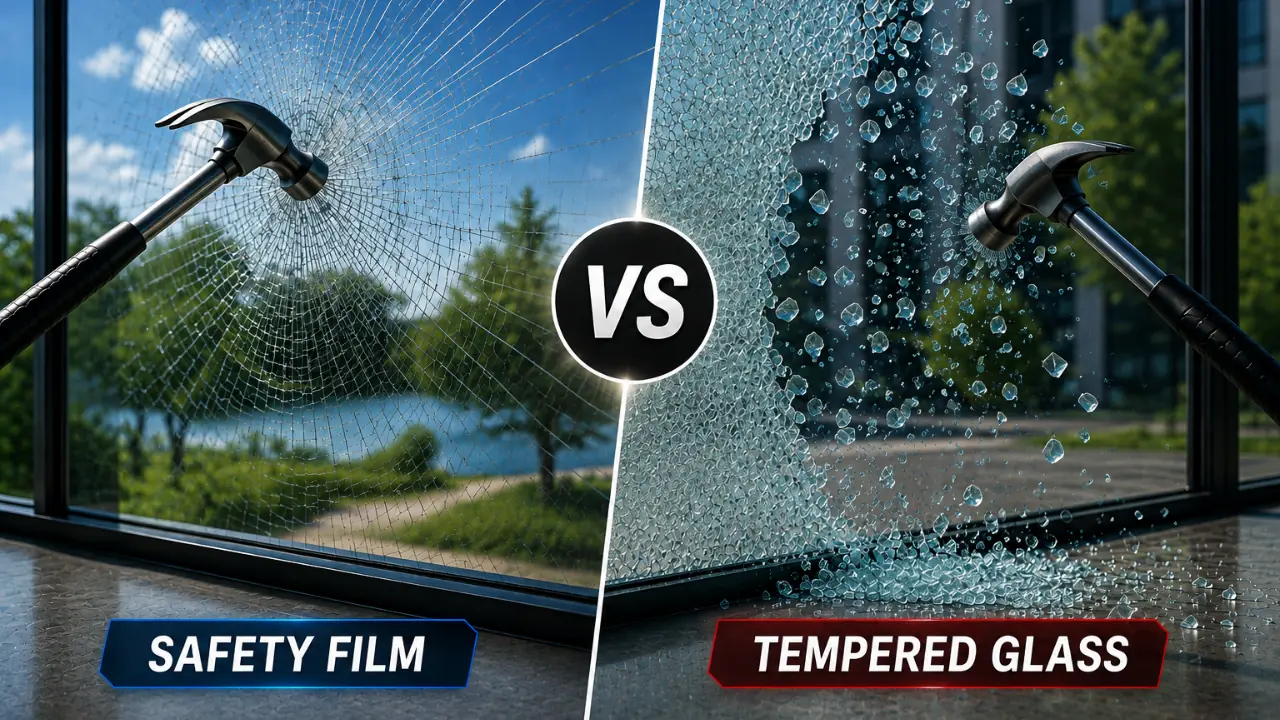
Safety film and tempered glass improve glass safety in different ways. Selecting safety film vs tempered glass comes down to the purpose of the glass, potential risks, building codes, and whether the glass is being replaced or upgraded. Tempered glass is built to resist stronger impacts before breaking, while safety glass film helps keep broken pieces together after the glass cracks.
Architects and facility managers select the glazing solution based on the building's requirements. Safety, security, retrofit needs, project cost, and local building codes all influence the final specification.
Here is a practical comparison of both options across the factors that matter most.
What Is Safety Window Film and How Does It Work?
Before comparing performance, it helps to understand how safety film works.
Safety glass film is a clear, multi-layer polyester film applied to existing glass. It does not prevent glass from breaking but holds broken fragments together, reducing the risk of flying shards after impact.
This makes glass safety film for buildings a practical upgrade for offices, schools, hospitals, retail stores, and other commercial spaces. Since it is installed over existing glass, it is a cost-effective retrofit safety film solution.
Security window film systems can also be installed with frame attachment, wet glazing, or mechanical attachment where higher levels of glass retention are required. Products such as blast-resistant window film and forced-entry window film are specified for applications with greater security demands.
The result is improved glass fragment retention, enhanced shatter resistance, and better protection against accidents, storms, and forced entry.
What Is Tempered Glass and How Does It Work?
Understanding tempered glass helps explain why it is widely used in modern buildings.
Also known as toughened glass, tempered glass is heat-treated to provide greater impact resistance than standard annealed glass, allowing it to withstand stronger impacts before breaking.
When it breaks, tempered glass shatters into small, blunt pieces instead of sharp shards, reducing the risk of serious injuries.
Doors, sidelights, shower enclosures, storefronts, partitions, and low-level glazing are among the locations where tempered glass is often required by code. These installations are part of modern architectural glazing and safety glazing.
Safety Film vs Tempered Glass: Key Differences
The table below compares safety window film vs tempered glass across the key differences.
| Factor | Safety Film | Tempered Glass |
|---|---|---|
| Main role | Holds broken glass together | Resists impact before breaking |
| Material | Multi-layer polyester film | Heat-treated safety glass |
| Installation | Applied to existing glass | Requires glass replacement or new glazing |
| Breakage behavior | Glass cracks but stays together | Glass shatters into small pieces |
| Post-break barrier | Maintains some barrier | Leaves an opening |
| Retrofit use | Strong | Limited |
| Code compliance | Not always a substitute | Often code-required |
| Cost | Lower for existing glass | Higher replacement cost |
| Security delay | Stronger | Weaker after breakage |
Safety film is designed to retain broken glass, whereas tempered glass reduces injury through its break pattern. Choosing between them comes down to the type of protection needed for the building.
Which Is Better for Human Impact Safety?
Different glazing applications demand different safety strategies.
Tempered glass safety remains the preferred choice for locations where occupants may accidentally collide with glass. Doors, interior partitions, shower enclosures, and low-level glazing commonly require tempered glass under building codes due to its safer break pattern.
Broken glass is less likely to scatter when safety film is installed. Even then, safety film for existing glass does not meet every requirement for safety glazing. Building code requirements vary by project and location.
Choosing the correct glazing material from the beginning helps reduce liability while improving occupant protection.
Which Is Better for Forced Entry Protection?
Security performance requires evaluating what happens after the glass breaks.
In security film vs tempered glass comparisons, security window film is often chosen to slow unauthorized entry. It helps keep broken glass in place, so creating an opening takes more time and effort.
This added resistance improves forced entry protection and smash-and-grab protection, giving alarms, security teams, or law enforcement more time to respond.
Tempered glass can handle stronger impacts before breaking. Once it fails, though, it usually leaves an immediate opening. For higher-security applications, professionally installed forced entry window film with engineered frame attachment offers stronger post-break performance.
Which Is Better for Storm or High-Wind Protection?
Weather-related hazards place different demands on glazing systems.
Safety film offers stronger glass fragment retention during storms and windborne impacts by keeping broken pieces attached after failure. This reduces hazardous debris inside occupied spaces and supports improved storm protection.
Tempered glass provides higher initial strength, yet severe impacts may still cause complete breakage. Once shattered, the small particles can disperse under high-wind conditions.
Projects located in hurricane-prone or extreme weather regions should consult glazing specialists to determine the most appropriate retrofit glazing or replacement strategy.
Which Is Better for Building Code Compliance?
Building regulations remain one of the most important factors in glazing selection.
Tempered glass is frequently required wherever codes specify safety glazing. Safety film should not be viewed as a universal replacement for tempered or laminated glass in these applications.
Some projects call for compliance with ANSI Z97.1, EN 12600, or GSA blast standards for specialized facilities. Confirm building code compliance before selecting the glazing to avoid changes later in the project.
Safety film adds protection to the existing glass. Where safety glazing is required by code, the film is not a substitute.
Cost and Retrofit Comparison
Project budgets often play a role when choosing between these glazing options, especially in occupied buildings.
| Factor | Safety Film | Tempered Glass |
|---|---|---|
| Existing glass upgrade | Easier | Requires replacement |
| Installation time | Faster | Slower |
| Disruption | Lower | Higher |
| Cost | Usually lower | Usually higher |
| Best use | Retrofit safety upgrade | New build or code-required areas |
| Maintenance | Periodic inspection | Glass replacement if broken |
In occupied buildings, retrofit safety film offers a straightforward way to improve existing glass. Since replacement is not usually required, installation causes less disruption.
Tempered glass is more economical when incorporated into new construction or planned renovations rather than installed as a standalone replacement.
Can Safety Film Replace Tempered Glass?
This question frequently arises during renovation projects.
In many situations, the answer is no. Safety film improves fragment retention after breakage, while tempered glass is manufactured as certified safety glass with different performance characteristics.
Some hazardous locations must still use tempered or laminated glazing under local regulations. Architectural safety film is best used as an added level of protection where code allows.
Can Safety Film Be Installed on Tempered Glass?
The two technologies can work together as a security film.
Applying safety film over tempered glass helps hold broken glass together after impact. Tempered glass offers greater strength before breaking, while the film helps keep the fragments in place once the glass fails.
This combination is often used in facilities that need enhanced security, blast mitigation, or added occupant protection. Proper installation, including engineered attachment systems where required, is important for the expected level of performance.
When Should Architects Specify Safety Window Film?
Architectural safety film is a practical option in the following situations:
- Existing buildings with standard glazing
- Offices that need quick safety upgrades
- Schools and hospitals looking for better fragment retention
- Retail storefronts exposed to theft risks
- Buildings requiring blast-resistant window film
- Facilities with limited replacement budgets
- Projects where downtime needs to stay low
- Properties that need added security without replacing existing glazing
Selecting the appropriate film system allows existing buildings to achieve meaningful safety improvements with less disruption.
Can Safety Film and Tempered Glass Be Used Together?
Some projects demand protection before and after glass breakage.
High-risk properties, including government facilities, schools, hospitals, retail storefronts, and institutional buildings, often have both tempered glass and safety film. The glass handles impact better, while the film holds the broken pieces together.
Used together, they offer protection against different types of risks without replacing the role of either system.
Final Decision: Which Is Better?
Choosing between tempered glass vs safety film for buildings depends on project objectives rather than product popularity.
Tempered glass is required where building codes call for certified safety glazing. Existing glass may instead be upgraded with safety film to improve fragment retention or forced-entry resistance. Where explosion hazards are a concern, blast-resistant window film may also be specified. Some projects use both.
Cost is only one part of the decision. Risk, occupancy, long-term performance, and code requirements matter as well.
Working with an experienced manufacturer such as Global Hi-Tech Films can help architects and project teams select safety film solutions that align with the building's risk profile, performance requirements, and applicable codes.
FAQs About Safety Film and Tempered Glass
- What is the difference between safety film and tempered glass? Tempered glass is a type of safety glass, while safety film is applied to existing glass to help hold broken pieces together after breakage.
- Is safety film as strong as tempered glass? No. Tempered glass is stronger before it breaks, while safety film improves the way glass behaves after it breaks.
- Can safety film replace tempered glass? Not always. If building codes require tempered glass, safety film cannot be used as a replacement.
- Is safety film better for break-in protection? It can be. Safety film makes it harder to create an opening quickly by helping keep broken glass in place.
- Is tempered glass required by building codes? Yes, in certain hazardous locations where safety glazing is required by local building codes.
- Can safety film be applied over tempered glass? Yes. It is often applied to tempered glass to improve fragment retention after breakage.
- Which is better for blast protection: safety film or tempered glass? Safety film is generally the preferred choice for blast mitigation because it helps hold broken glass together after an explosion.
- Which is more cost-effective: safety film or tempered glass? Safety film is usually more cost-effective for upgrading existing glass, while tempered glass is often chosen for new construction.
- Does safety film stop glass from breaking? No. It does not prevent breakage, but it helps keep shattered glass together after the glass breaks.
- When should architects use safety film and tempered glass together? Using both is a good option for projects that need added safety, security, or better post-break glass performance.
Read also
 Global Hi-Tech FilmsWindow Films
Does Automotive Window Film Affect GPS, Mobile Signals or Keyless Entry?
Does automotive window film affect GPS, mobile signals or keyless entry? Learn how film construction can influence vehicle connectivity and signals. Explore now.
 Global Hi-Tech FilmsArchitecture
Can Window Film Be Applied to Double-Pane and Low-E Glass?
Can window film be used on double-pane and Low-E glass? Learn about compatibility, glass types, thermal stress and key installation factors. Explore now.
 Global Hi-Tech FilmsWindow Films
Why Does Automotive Window Film Bubble, Peel or Change Color?
Discover why automotive window film bubbles, peels or changes color, the common causes of film failure, and how quality installation helps prevent damage.