

Skin Cancer Awareness Month 2026: Why Window Film Is Essential for Indoor UV Protection
This Skin Cancer Awareness Month 2026, learn how indoor UV exposure harms skin and how window film blocks up to 99.9% UV for lasting protection.
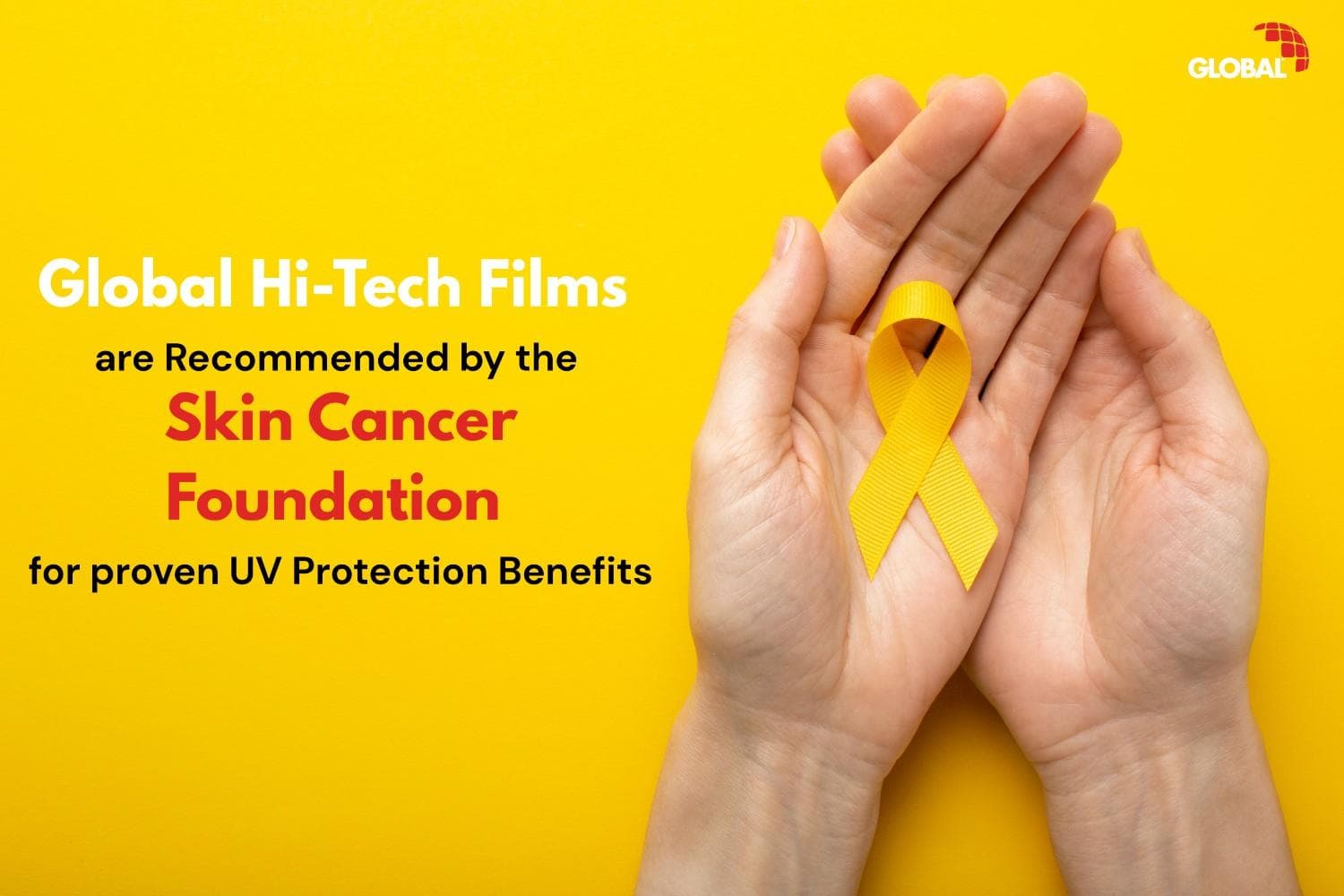
Sunlight streaming through your windows may feel harmless, yet it carries invisible ultraviolet radiation that quietly damages your skin every day. As Skin Cancer Awareness Month arrives, the focus must expand beyond outdoor sunscreen to address UV exposure inside homes, offices, and vehicles. Installing certified window film transforms ordinary glass into a reliable barrier against harmful rays.
Global Hi-Tech Films delivers professionally tested solutions that block penetrating rays before they reach your skin. This simple upgrade closes a critical gap in your daily routine and supports long-term wellness.
Indoor UV Exposure: The Hidden Risk Inside Homes, Offices, and Cars
Most people focus heavily on outdoor sun protection while overlooking radiation that enters enclosed spaces. Understanding how ultraviolet rays behave indoors is essential for effective skin cancer prevention.
How UVA and UVB Rays Pass Through Glass and Affect Your Skin
Ultraviolet radiation divides into two primary categories that interact with human skin differently. UVB rays cause surface level burning and are largely blocked by standard architectural glass. UVA rays operate at longer wavelengths, passing directly through untreated residential and automotive panes. These longer waves penetrate deep into the dermis where they degrade structural proteins, trigger uneven pigmentation, and contribute to cellular DNA damage. Exposure occurs while you work near a sunlit desk, commute in traffic, or rest in a bright living room. The radiation does not stop at the window frame.
Long-Term Effects of Indoor UV Exposure on Skin Health
Unlike immediate sunburn, indoor ultraviolet exposure builds silently over months and years. Daily commutes add up to hundreds of hours of unshielded windshield exposure. Window side office seating and sunlit kitchen areas create consistent radiation zones that most people never consider hazardous. This steady indoor exposure creates a compounding effect that topical products cannot address. Over time, the accumulated dose weakens skin resilience, accelerates photoaging, and elevates long term health risks.
Why Standard Glass Fails to Protect Against UV Radiation
Clear glass provides visibility and natural light, but it offers minimal defense against ultraviolet radiation. Recognizing the structural limitations of untreated panes is essential for building a complete defense strategy.
The Science Behind Glass and Ultraviolet Transmission
Standard float glass and basic double pane windows filter a small portion of UVB wavelengths while allowing the majority of UVA radiation to pass through the pane. Factory tinted or laminated automotive glass lacks consistent ultraviolet rejection across the full spectrum. The molecular structure of basic silica glass simply does not absorb or reflect long wave ultraviolet energy. The result is a false sense of security. You may feel shielded from direct sunlight, yet your skin continues to absorb damaging rays that compromise cellular integrity.
Common Misconceptions About Indoor Sun Safety
Many homeowners and vehicle operators assume that staying indoors guarantees complete ultraviolet avoidance. Others believe that curtains or blinds provide sufficient filtration during daylight hours. While window treatments reduce visible brightness, they rarely block penetrating UVA wavelengths that cause deep tissue damage. Cloudy days also present a hidden risk, as ultraviolet radiation maintains high intensity regardless of overcast conditions. Relying on shade, clothing, or intermittent blinds leaves a significant exposure gap that modern prevention strategies must address.
How Window Film Blocks UV Rays and Protects Indoor Spaces
Professional window film closes the exposure gap that untreated glass leaves open. The technology relies on advanced optical engineering rather than cosmetic tinting.
The Role of Professional Installation and Certification
Certified sun control films undergo rigorous independent laboratory testing for ultraviolet rejection, optical clarity, and long term adhesion. The installation process requires precise surface preparation, moisture control, and heat sealing to ensure flawless bonding. Professional installers evaluate thermal stress limits, existing factory coatings, and frame compatibility before application. This assessment guarantees optimal performance and prevents glass distortion or seal failure. Certified products deliver measurable ultraviolet blocking that retail DIY films cannot consistently achieve.
Certified UV Protection: Global Hi-Tech Films and Skin Cancer Foundation Approval
Global Hi-Tech Films manufactures sun control solutions that are officially certified by the American Skin Cancer Foundation. The certification confirms that the films meet strict clinical standards for ultraviolet filtration and visual safety. Once applied to existing glass, the film creates a permanent barrier that filters harmful wavelengths without blocking visible daylight. Unlike sunscreen, which requires frequent reapplication and leaves gaps during busy routines, window film works continuously. It requires no daily maintenance, no behavioral adjustments, and no recurring costs. The film simply performs as a passive defense layer that aligns with modern skin cancer prevention practices.
The table below compares how certified window film for indoor UV protection outperforms untreated glass in blocking harmful UV rays and supporting long-term skin health.
| Performance Factor | Standard Untreated Glass | Certified Window Film for UV Protection |
|---|---|---|
| UVA Transmission | High penetration with minimal filtration | Blocks up to 99.9 percent of UVA radiation |
| UVB Filtration | Partial blockage that varies by glass type | Consistent near complete rejection |
| Maintenance Requirement | None, but offers no ongoing ultraviolet defense | None, delivers permanent filtration after professional installation |
| Indoor Exposure Risk | Continuous radiation contact near windows and windshields | Significantly reduced exposure in all glass enclosed spaces |
| Skin Cancer Prevention Alignment | Requires supplemental topical protection indoors | Works passively alongside outdoor sun safety routines |
Key Benefits of Window Film for UV Protection, Comfort, and Energy Efficiency
Beyond ultraviolet blocking, professionally installed sun control film delivers measurable improvements to interior comfort and material preservation. Global Hi-Tech Films engineers products that balance clinical grade protection with architectural and automotive aesthetics. The certification process verifies optical clarity, thermal performance, and long term adhesion. These attributes ensure that indoor UV protection does not compromise visibility, natural lighting, or interior design standards.
- Complete Ultraviolet Rejection: Advanced polymer layers absorb and reflect both UVA and UVB wavelengths, significantly reducing cumulative radiation exposure near windows and lowering the risk of photoaging and cellular damage.
- Solar Heat Management: Infrared filtration blocks thermal transfer from entering your interior space, maintaining comfortable room temperatures while reducing reliance on energy intensive cooling systems.
- Effective Glare Diffusion: Precision optical tuning softens intense direct sunlight without eliminating natural brightness, eliminating screen washout and reducing eye strain during daytime work and leisure activities.
- Long Term Fade Prevention: Consistent UV blocking prevents radiation damage to upholstery, hardwood floors, artwork, and window treatments, extending the lifespan of valuable interior investments.
- Professional Grade Durability: Factory grade adhesives and precision installation ensure secure bonding without bubbling, peeling, or optical distortion, delivering reliable indoor UV protection performance for over a decade.
Strategic Steps to Implement Indoor UV Protection This Month
Skin Cancer Awareness Month provides an ideal opportunity to evaluate your daily environment and implement lasting protective upgrades. Following a structured approach ensures that your indoor spaces align with modern dermatological recommendations.
- Audit High Exposure Zones: Identify rooms, workspaces, and vehicle seating areas that receive direct sunlight for extended periods. Note window orientation, glass age, and existing tint levels.
- Consult Certified Installers: Request a professional evaluation to determine compatible film types, thermal stress ratings, and visible light transmission options for your specific glass construction.
- Prioritize Primary Living and Commuting Areas: Begin installation in spaces where you spend the most time, such as home offices, driver and passenger side windows, and sunrooms.
- Combine With Outdoor Sun Safety Habits: Maintain broad spectrum sunscreen application, UPF clothing, and peak hour avoidance for direct outdoor exposure. Indoor film addresses the complementary exposure gap.
- Schedule Routine Skin Evaluations: Book annual dermatological examinations to monitor changes, track early indicators, and adjust your protection strategy based on clinical guidance.
Complete UV Protection: Safeguarding Your Skin Indoors and Outdoors
Skin Cancer Awareness Month highlights an important reality: indoor spaces are not free from UV exposure. Standard glass allows harmful rays to pass through, creating a silent long-term risk. Upgrading to certified window film transforms your environment into a safer space that actively protects your skin. Global Hi-Tech Films provides proven solutions that block UV rays, reduce heat, and maintain clarity.
Take the next step toward complete UV protection by consulting a certified installer. Upgrade your glass today and strengthen your daily defense against harmful UV exposure.
Read also
 Global Hi-Tech FilmsWindow Films
Does Automotive Window Film Affect GPS, Mobile Signals or Keyless Entry?
Does automotive window film affect GPS, mobile signals or keyless entry? Learn how film construction can influence vehicle connectivity and signals. Explore now.
 Global Hi-Tech FilmsArchitecture
Can Window Film Be Applied to Double-Pane and Low-E Glass?
Can window film be used on double-pane and Low-E glass? Learn about compatibility, glass types, thermal stress and key installation factors. Explore now.
 Global Hi-Tech FilmsWindow Films
Why Does Automotive Window Film Bubble, Peel or Change Color?
Discover why automotive window film bubbles, peels or changes color, the common causes of film failure, and how quality installation helps prevent damage.