

Can Window Film Be Applied to Panoramic Sunroofs?
Can window film be applied to panoramic sunroofs? Learn about glass compatibility, heat reduction, UV protection and key installation factors.
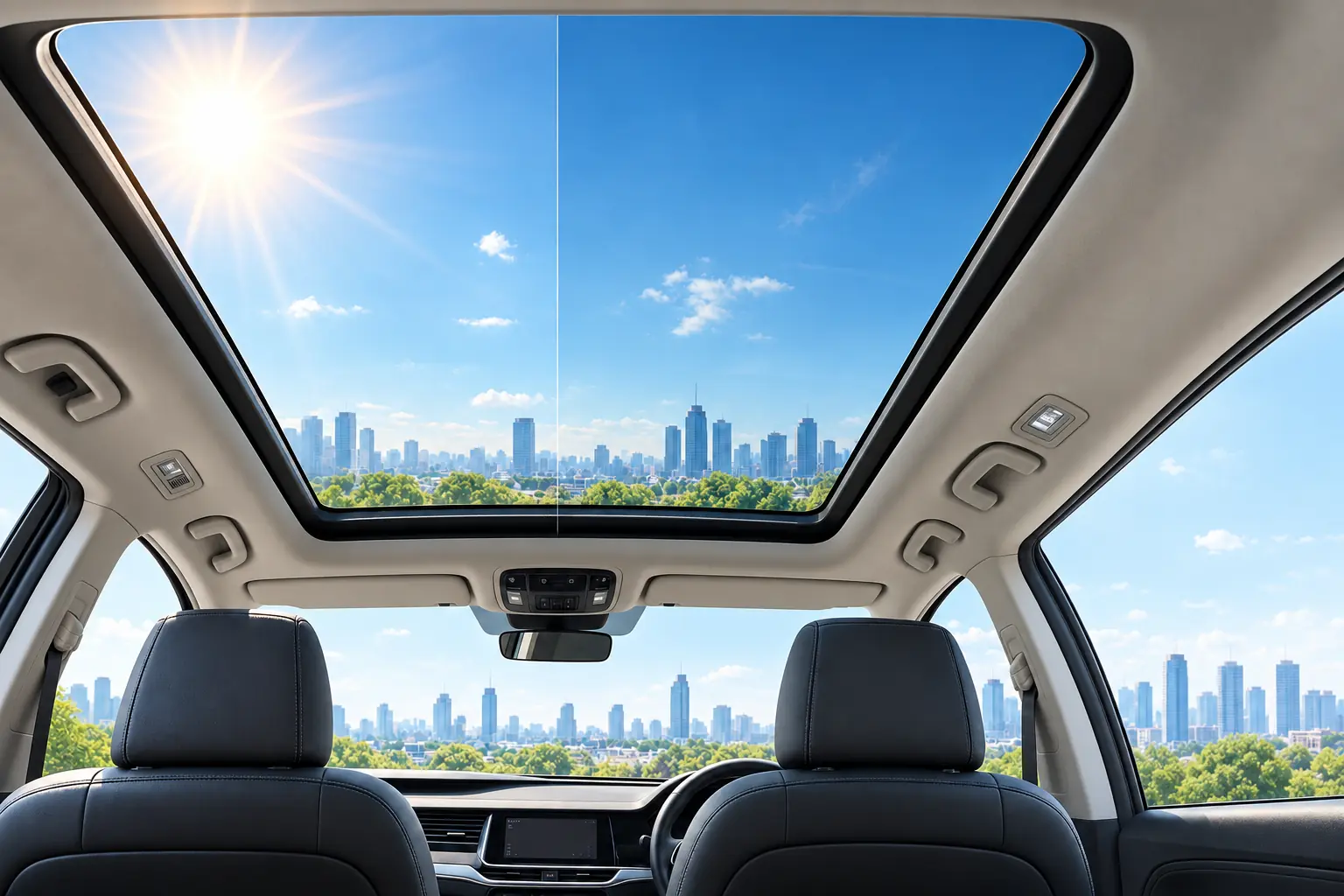
A panoramic sunroof looks great, but all that glass can let in a lot of heat and sunlight. Window film for panoramic sunroofs can help reduce the heat, glare, and UV entering the cabin. Still, not every automotive window film is suitable for sunroof glass, so the film needs to be chosen with the glass and its existing tint in mind.
Here is what to consider when choosing a film for your sunroof, including film types, safety, and glass compatibility.
Can Window Film Be Applied to Panoramic Sunroofs?
The answer to whether window film can be applied to panoramic sunroofs depends on the type, construction, and specifications of the sunroof glass.
Factory smoked glass already cuts down the light entering the cabin. It does not necessarily keep out the same amount of heat and UV. Adding a dark film on top may make the sunroof glass absorb more heat in direct sunlight.
Sunroof tinting safety comes down to the combination of glass and film. Factory smoked glass, the film's specifications, and the amount of sunlight hitting the roof can all affect thermal stress. A professional installer can determine whether the combination is suitable.
Interior Tint vs Exterior Sunroof Protection Film: What’s the Difference?
The application side changes both the purpose and performance of the film. The following comparison shows where each option fits.
| Factor | Interior Sunroof Tint | Exterior Sunroof Protection Film |
|---|---|---|
| Application side | Inside the vehicle | Outside the vehicle |
| Main material | Automotive window tint | Thick protection film or sunroof PPF |
| Main purpose | Heat, glare, UV, and comfort | Heat control plus chip and scratch protection |
| Heat handling | Filters heat after it passes through glass | Helps manage heat before it builds in glass |
| Physical protection | Limited | Helps protect against chips, scratches, and debris |
| Best for | Cabin comfort | Glass protection and exterior exposure |
An exterior sunroof protection film therefore serves a different role from conventional interior tint. Also known as sunroof PPF in some applications, it can provide an additional barrier against road debris and surface damage.
Which Film Is Best for Panoramic Sunroofs?
A few film types can work on a panoramic sunroof, although they are not interchangeable. The glass and the existing tint should come first when deciding what to use.
Ceramic window film works well for interior tinting when keeping the roof relatively light is important. A ceramic tint for a sunroof can reduce heat, UV exposure and glare. Brands like Global Hi-Tech Films offer automotive window film options that can be considered for this type of application, depending on the glass and film specifications.
Non-metallic film is a practical option for cars with electronic and wireless features.
For a lighter look, you can go with a clear film or one with a higher VLT. It will cut some of the heat and UV without making the sunroof noticeably darker.
An exterior protection film serves a different purpose. It can protect the outer glass from chips, scratches, and road debris. Very dark films should be avoided when the glass already has a heavy tint, as should products with no clear compatibility information.
The final choice comes down to the glass, existing tint, VLT, and film specifications. With a large curved roof panel, professional installation is also worth prioritising.
Benefits of Panoramic Sunroof Window Film
A properly selected film can address several issues associated with large areas of overhead glass. Key benefits include:
- Panoramic sunroof heat rejection can reduce the amount of solar heat entering the cabin.
- Panoramic roof heat protection cuts the heat coming through the roof glass.
- Car sunroof UV protection limits UV exposure inside the vehicle.
- Glare reduction makes harsh overhead sunlight easier to deal with.
- Less UV exposure also means less fading of seats, trim, and other interior surfaces.
- With less heat entering the cabin, the air conditioner has less cooling to handle.
This matters most when the car sits in the sun for hours. The film should keep the heat and glare down without making the glass difficult to see through.
Risks and Mistakes to Avoid
Film choice and installation both matter when you have a panoramic roof. Here are some mistakes worth avoiding:
- Going by how dark the film looks instead of its performance.
- Putting dark film over factory smoked glass without checking the combined VLT and heat absorption.
- Ignoring thermal stress, which can sometimes lead to stress cracks.
- Choosing metallic film without considering the vehicle’s electronic systems.
- Attempting a DIY job on large, curved panoramic glass.
- Covering seals, moving edges or parts that form part of the sunroof mechanism.
- Overlooking special coatings or glass construction when choosing the film.
The glass, tint and film specifications need to be checked before installation. On a large roof panel, even a small fitting error can be difficult to correct.
Choosing the Right Film for a Panoramic Sunroof
With a panoramic roof, sunlight comes in from above, bringing heat, glare and UV exposure with it. Sunroof window film is one way to manage these issues. Ceramic tint suits those looking for heat and UV protection without a very dark shade, while exterior sunroof protection film adds a layer of surface protection.
No single film fits every roof. Factory tint, glass type, VLT, heat absorption and the sunroof mechanism should all be considered before installation.
Choose a panoramic sunroof tint for how it performs on your vehicle, not just for how dark it looks.
Read also
 Global Hi-Tech FilmsWindow Films
Does Automotive Window Film Affect GPS, Mobile Signals or Keyless Entry?
Does automotive window film affect GPS, mobile signals or keyless entry? Learn how film construction can influence vehicle connectivity and signals. Explore now.
 Global Hi-Tech FilmsArchitecture
Can Window Film Be Applied to Double-Pane and Low-E Glass?
Can window film be used on double-pane and Low-E glass? Learn about compatibility, glass types, thermal stress and key installation factors. Explore now.
 Global Hi-Tech FilmsWindow Films
Why Does Automotive Window Film Bubble, Peel or Change Color?
Discover why automotive window film bubbles, peels or changes color, the common causes of film failure, and how quality installation helps prevent damage.